A member of Congress got into trouble for saying, “the lack of health insurance does not kill”. In fact, health care is a complex issue, with lots of alternatives to a mediocre, high priced insurance policy that gives you a card but not coverage—forcing Nuns to buy birth control pills and 60 year old men to buy abortion coverage (wonder how many men have had an abortion at Planned Parenthood?)
“How was Families USA able to tally up all that carnage with such pinpoint precision? As we explained in 2009, these claims are based on a chain of reports created over two decades. Each preserved the errors in earlier efforts, misinterpreted or mischaracterized the original findings, and based its projections on data that are now more than 40 years old.
The chain begins with a paper by Peter Franks et al. in the Journal of the American Medical Association in 1993. In the early 1970s, people were interviewed (only once) to determine their health insurance status. In 1987, they were surveyed to see who was alive and who was dead. The researchers made the implicit assumptions that someone who was uninsured in the early 1970s remained uninsured until 1987 and that someone with private insurance was continuously covered over the same period.
The authors made no attempt to determine the causes of death. Auto accident fatalities, gunshot victims, suicides – all these were implicitly assumed to be affected by whether people had health insurance. Armed with these heroic assumptions, the authors concluded that being uninsured increased the probability of death by 25%.”
The Fake News media has no interest in truth or facts—so when you hear that a large number of people died due to lack of health insurance, remember, it is merely a bad Saturday Night Live audition by bad comedians.
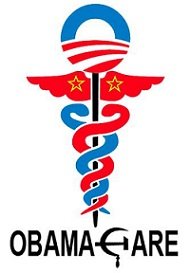
Does Lack Of Health Insurance Kill?
John C. Goodman, Forbes, 5/11/17
This editorial was co-authored by Dr. Linda Gorman, who did almost all of the work. Dr. Gorman is the Director of Heath Care Policy at the Independence Institute.
The Republican health plan will kill people,” says Bernie Sanders. “The Republican Party is the party of death,” says the headline at Political dig. “Repealing Obamacare will kill more than 43,000 people a year,” says an opinion piece in the Washington Post.
Other writers have shown similar lack of restraint:
- “If 24 million people lose insurance, we’ll see more than 24,000 extra deaths per year,” writes Julia Belluz at VOX, adding that “There’s no question that the fate of the Affordable Care Act is a matter of life and death.”
- “House Republicans are … consigning thousands of people with serious illnesses to death by making them uninsurable in an era of unaffordable treatment,” writes Michael Jeffries in the Boston Globe.
- “Nearly 45,000 annual deaths are associated with lack of health insurance,” writes Charles Blow in the New York Times, adding that the latest Republican health bill poses a “death threat … for many Americans.”
The Washington Post gave Sanders Four Pinocchios for his claim. We’d like to give all these writers two dozen Pinocchios. Every claim they are making is based on “fake research” that has been thoroughly discredited by independent scholars.
By the way, this is all a rehash of the scare tactics used to justify passing Obamacare in the first place. For example, “Dying for Coverage,” a report by Families USA, made the astounding claim that six people died every day in Florida because they are uninsured. Eight died every day in Texas, nine in California, and four in New York.
How was Families USA able to tally up all that carnage with such pinpoint precision? As we explained in 2009, these claims are based on a chain of reports created over two decades. Each preserved the errors in earlier efforts, misinterpreted or mischaracterized the original findings, and based its projections on data that are now more than 40 years old.
The chain begins with a paper by Peter Franks et al. in the Journal of the American Medical Association in 1993. In the early 1970s, people were interviewed (only once) to determine their health insurance status. In 1987, they were surveyed to see who was alive and who was dead. The researchers made the implicit assumptions that someone who was uninsured in the early 1970s remained uninsured until 1987 and that someone with private insurance was continuously covered over the same period.
The authors made no attempt to determine the causes of death. Auto accident fatalities, gunshot victims, suicides – all these were implicitly assumed to be affected by whether people had health insurance. Armed with these heroic assumptions, the authors concluded that being uninsured increased the probability of death by 25%.
 About Stephen Frank


Speak Your Mind