It appears that our utility companies were the cause of some of the fires in 2017. Some very large, some very small. In such cases, if a firm was the cause of destruction of property, they must pay—and they should. In the case of the California utility companies—if the billions in fines and reimbursements are levied it WILL mean two things. One, the cost of energy will go sky high. And, if that does not work, they will go bankrupt. Either way, we pay for the incompetence of the utility companies.
“The state saw five of its 20 most destructive fires between October and December of 2017, capping a year in which the California Department of Forestry and Fire Protection (Cal Fire) recorded 7,117 wildfires. The previous five years averaged 4,835 wildfires per year. The total cost, including fire suppression, insurance and recovery, could be $180 billion, Courthouse News Service reported.
For the fires, California’s IOUs face a special kind of liability. Contrary to 48 other states, California courts have interpreted the law on utility liability to mean that utilities must pay all damage costs if utility equipment was involved in a fire, whether the utility was negligent or not.
There is a growing concern that this financial burden could make it difficult for California IOUs to remain solvent. Regulators are asking how to judge the “prudence” of the IOUs’ preparations in the “new normal” of extreme weather linked to climate change. While victims’ attorneys and insurance companies want IOUs held accountable, legislators and policymakers are wondering if the IOUs are too big to fail.”
How do you think this should be handled and financed? Please start the conversation on the comment section of the website for this article.
Utility bankruptcy concerns rise as bill comes due for 2017 California fires
Some 394 wildfires at the end of 2017 could cost California’s IOUs tens of billions, but there are ways to mitigate the financial impact.
Herman K. Trabish, Utility Dive, 6/25/18
California’s state motto is “Eureka!” But its energy sector’s motto is quickly becoming “Somebody do something!”
The state’s grid operator is slowly learning to cope with levels of renewable generation that require unprecedented system flexibility; regulators are studying an onslaught of customer choice nobody has written rules for; and now, California’s investor-owned utilities (IOUs) face liability for the state’s 2017 wildfires that could bankrupt them.
The state saw five of its 20 most destructive fires between October and December of 2017, capping a year in which the California Department of Forestry and Fire Protection (Cal Fire) recorded 7,117 wildfires. The previous five years averaged 4,835 wildfires per year. The total cost, including fire suppression, insurance and recovery, could be $180 billion, Courthouse News Service reported.
For the fires, California’s IOUs face a special kind of liability. Contrary to 48 other states, California courts have interpreted the law on utility liability to mean that utilities must pay all damage costs if utility equipment was involved in a fire, whether the utility was negligent or not.
There is a growing concern that this financial burden could make it difficult for California IOUs to remain solvent. Regulators are asking how to judge the “prudence” of the IOUs’ preparations in the “new normal” of extreme weather linked to climate change. While victims’ attorneys and insurance companies want IOUs held accountable, legislators and policymakers are wondering if the IOUs are too big to fail.
The concern about the utilities’ financial viability has brought forward potential solutions, including ways to reduce their exposure to liability through risk pools and settlements with their insurers and others who contributed to the fire.
The concern about the utilities’ financial viability has brought forward potential solutions, including ways to reduce their exposure to liability through risk pools and settlements with their insurers and others who contributed to the fire.
Even so, the stakes for Pacific Gas & Electric (PG&E) and Southern California Edison (SCE) are huge, and many say San Diego Gas and Electric (SDG&E) is only one big blaze away.
Fires and bankruptcy
The bankruptcy threat comes out of a September 2017 ruling by the California Public Utilities Commission (CPUC). SDG&E asked the commission for cost recovery on its $379 million liability for 2007 wildfires. The CPUC ruled against SDG&E.
The commission said that because the utility was found negligent under the state’s “strict liability” interpretation of the “inverse condemnation” doctrine, its shareholders and not its customers must bear the loss. PG&E and SCE shareholders may now face the same fate under that logic.
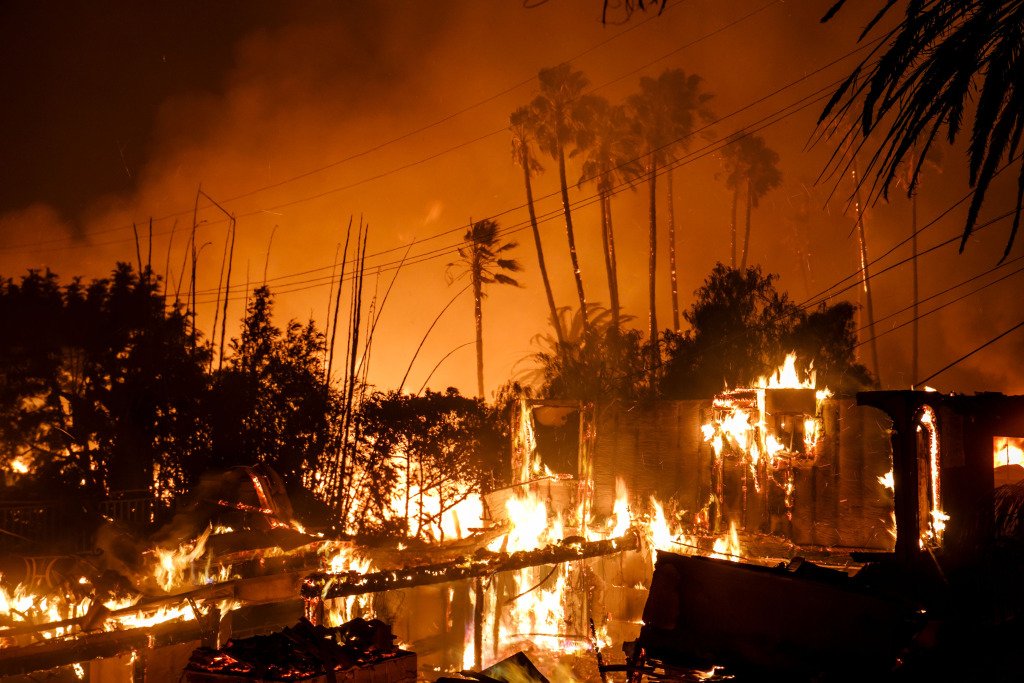
California saw significant loss and damage from wildfires last fall and winter.
From October 8 to October 9, 172 wildfires broke out in Northern California. In what Cal Fire called the “Fire Siege,” 18 fires “grew into large, fast moving conflagrations,” Cal Fire Deputy Director Joe Tyler told the California Public Utilities Commission (CPUC) on January 31. Some 8,920 structures were destroyed and 44 people lost their lives, he added.
 About Stephen Frank


Speak Your Mind