It appears that state and local officials may soon be empowered to do something about the problem
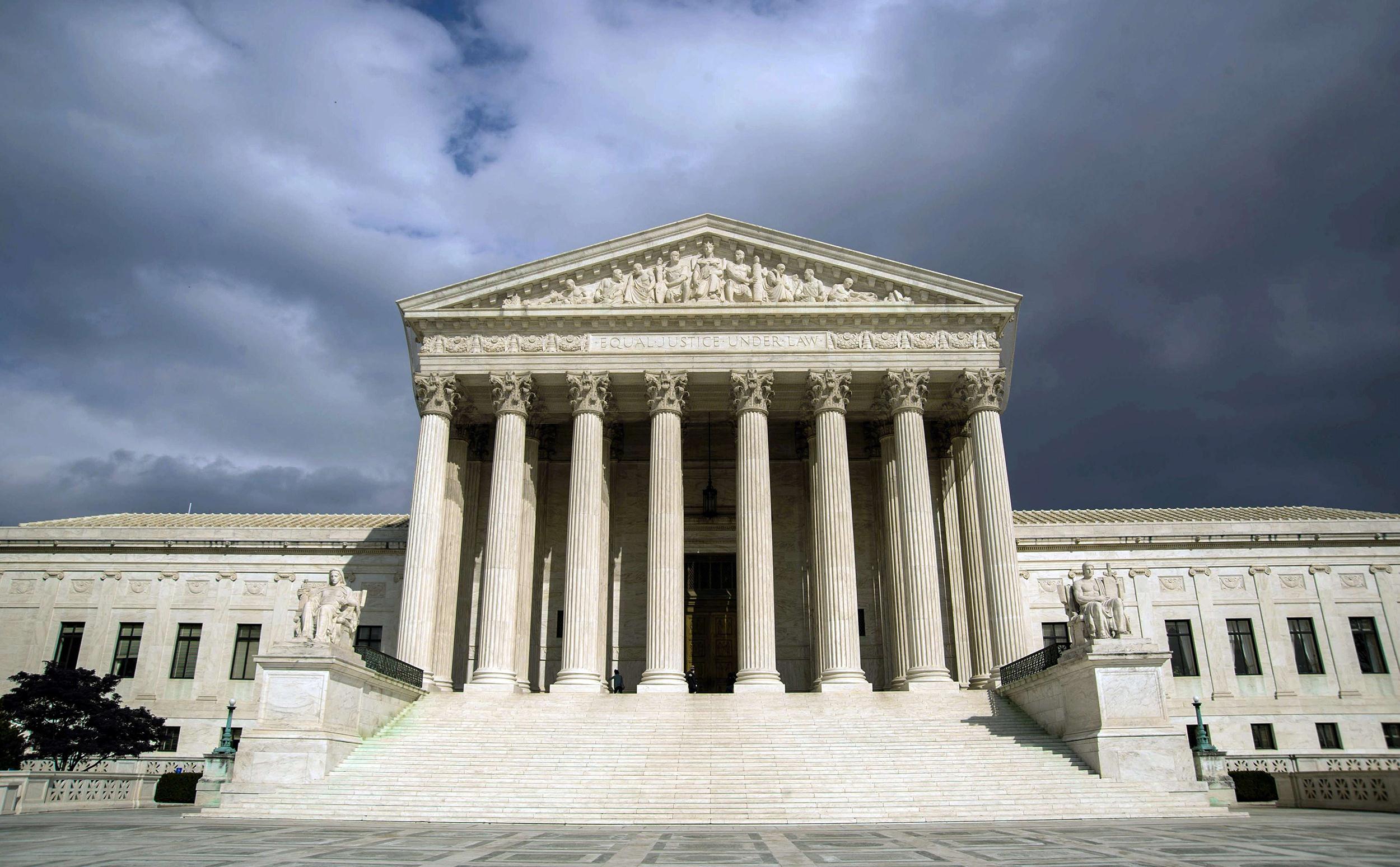
When discussing homelessness, California state and local officials often point to a federal court ruling they say ties their hands completely when it comes to dealing with the problem.
But it appears, from the tenor of the oral arguments today in front of the United States Supreme Court on a homelessness case, that state and local officials may soon be empowered to do something about the problem.
Or, at the very least, they will lose their oft-repeated “the courts won’t let us do anything” excuse when it comes to not addressing the problem and thereby losing their political cover.
Click here to SUBSCRIBE to CA Political Review
The case heard today is called City of Grants Pass v. Johnson – It involves an Oregon city appealing a Ninth Circuit (which covers basically the western states) Federal Circuit Court ruling that disallowed the city from enforcing its “anti-camping” ordinance.
In 2018, the same court, in a case called Martin v. Boise, ruled, in a nutshell, that if a city did not have a shelter spot for a homeless person they could not in effect criminalize the act, or “status” of being homeless on its own. The Grants Pass case is similar but involves civil actions (fines, etc.) as well.
SCOTUS Blog explains the Grants Pass case:
The question is one that the U.S. Court of Appeals for the 9th Circuit, based in San Francisco, has grappled with repeatedly in recent years. In Martin v. City of Boise, the court of appeals held that punishing homeless people for public camping would violate the Eighth Amendment’s ban on cruel and unusual punishment if they did not have access to shelter elsewhere. The court of appeals reasoned that, just as the city could not punish someone for their status – being homeless – it also could not punish them for conduct “that is an unavoidable consequence of being homeless.”
A few weeks after the 9th Circuit’s decision in Martin, three individuals who are involuntarily homeless went to federal court in Oregon to challenge a ban on public camping in Grants Pass, a southern Oregon city with just under 40,000 people.
The city came to the Supreme Court in August, asking the justices to weigh in. The 9th Circuit’s rulings, the city wrote, have created “a judicial roadblock preventing a comprehensive response to the growth of public encampments in the West.” Without the ability to act, the city wrote, such encampments have led to “crime, fires, the reemergence of medieval diseases, environmental harm, and record levels of drug overdoses and deaths on public streets.”
In other words, the city is asking the Supremes for permission to enforce its laws.
And many California officials have agreed with the stance. Sacramento County District Attorney Thien Ho filed an “amicus” (or supporting) brief with the court as the Globe reported in January, as did Rep. Kevin Kiley (R-Rocklin and several other California members of Congress.
“Homelessness in California is a crisis and a tragedy. But today can be a new day. I filed a brief asking the Supreme Court to give our communities back the ability to regulate homeless encampments in a common sense way,” Kiley said. “The Court appears poised to that by reversing misguided 9th Circuit decisions that are out-of-step with the rest of the country. This case is an opportunity to reclaim our public spaces, restore order, reduce crime, protect public health, and get homeless individuals the assistance they need.”
The liberal justices today took the discussion to such an absurd extreme one must question what is is in the water cooler at the Supreme Court. Justice Elena Kagan wondered if, since the city could (somehow) ban sleeping could it not ban another “biological necessity” like “breathing” while Justice Ketanji Brown Jackson wondered if a city “decided it was going to execute homeless people” because they were homeless.


Speak Your Mind