Gov. Brown’s Greenhouse-Gas Cuts Scrutinized

As reported by the Associated Press:

SACRAMENTO, Calif. (AP) — The top lawyer for the California Legislature says Gov. Jerry Brown exceeded his authority when he issued an executive order imposing what he called the most aggressive carbon-emission reductions in North America, aligning California with the European Union’s aggressive climate change standards.

The opinion by Legislative Counsel Diane Boyer-Vine does not curtail Brown’s authority to continue implementing the greenhouse gas reduction plan, but it suggests a lawsuit challenging them could be successful.

The Democratic governor issued the executive order last year setting a new target for cutting carbon emissions to 40 percent below 1990 levels by 2030. …

Click here to read the full story

Gov. Brown’s War on Climate Only Making Things Worse

Global WarmingIn his quest to improve air quality locally, Gov. Jerry Brown actually risks pushing more greenhouse gasses into skies globally.

Last July, Brown issued an executive order commanding state agencies to develop “an integrated action plan by July 2016 that establishes clear targets to improve freight efficiency, transition to zero-emission technologies, and increase competitiveness of California’s freight system.”

The executive order is widely seen by industry as a prelude to the announcement later this year of more stringent air quality mandates that will pose costly new burdens on the state’s goods movement sector. 

The movement of freight is integral to the state’s economy. As the executive order acknowledged: “California’s complex freight transportation system is responsible for one-third of the State’s economy and jobs, with freight-dependent industries accounting for over $700 billion in revenue and over 5 million jobs in 2013.”

The state’s freight transportation system is also exceedingly complex, as multilayered as it is multifaceted. It involves activities as diverse of home pizza deliveries to the hauling of freshly-harvested produce in the Central Valley to the air cargo operations at LAX and SFO.

Perhaps because of its complexity, state policymakers have tended to fixate on the freight traffic associated with the state’s seaports, especially the three huge container ports at Los Angeles, Long Beach, and Oakland.  (The cover of the California Freight Mobility Plan is tellingly dominated by a full-color photo of a large container ship.)

Maritime officials expect to see the California Air Quality Board impose new regulations that can be met only by investing tens of billions of dollars (according to new study by Moffat & Nichol, a leading infrastructure advisory firm) on new equipment and infrastructure.

The rub is how to finance compliance with these stiffer environmental mandates without driving a substantial volume of business away from California ports.

Terminal operators at ports here and around the world are financially stressed, as a new report from London-based Drewry Shipping Consultants attests. Only weeks ago, one major terminal operator unilaterally cancelled its lease at the Port of Oakland in order to focus its limited financial resources elsewhere.

Inevitably, new business costs get passed on. Saddled with huge new expenses, terminal operators at California ports will be obliged to charge higher fees. But the shipping lines and cargo owners they serve have choices, especially when the great majority of the cargoes passing through the Ports fof Los Angeles and Long Beach ports originate in or are destined for other regions of the U.S.

Even in the absence of costly new California-only air quality mandates, the state’s ports are already at risk of seeing an important share of the transpacific trade diverted to East or Gulf Coast ports through the expanded set of locks at the Panama Canal.

That’s good, you say. Fewer ships calling at California ports should mean cleaner air for California residents.

Perhaps, but there is a perversely ironic trade-off in diverting shipments away from some of the nation’s greenest ports and sending them off to ports on the East and Gulf coasts.

The fact is that diverting containers from the Ports of Los Angeles and Long Beach would add immeasurably to the CO2emissions from steamships carrying imported goods for American consumers and industry.

Consider that the sailing distance from Shanghai, Asia’s largest container port, to the Port of Los Angeles is about 5,810 nautical miles. A ship sailing from Shanghai to the Port of New York-New Jersey via the Panama Canal would cover approximately 10,600 nautical miles, a journey some 85% longer.

While in U.S. territorial waters, ships are obligated to burn low-sulfur fuels. On the high seas, however, they typically switch to a cheaper but infinitely more noxious bunker fuel, a major source of greenhouse gas emissions.

To compound the irony, cargoes diverted through the Panama Canal cargo often wind up at ports in states where the responsible parties are decidedly more cavalier about climate change.

In Florida, Gov. Rick Scott has reportedly banned state officials from referring to global warming or climate change or rising sea levels. The head of the South Carolina Port Authority recently disputed the need for ships to turn off their massive diesel engines while in port. The Port of New York/New Jersey lately rescinded a regulation calling for cleaner trucks to move containers.

So there you have it: The law of unintended consequences strikes again.

Sacramento-based international trade economist who specializes in the logistics of foreign trade.

Originally published by Fox and Hounds Daily

Wheel of Climate Change

Wheel of Climate Change

‘Nothing Historic’ About Paris Climate Deal

Global WarmingThe energy industry is already saying Saturday’s Paris global warming agreement is “unenforceable, underfunded, and non-binding.”

“There is nothing historic about this deal,” said American Energy Alliance President Thomas Pyle in an email to the Daily Caller News Foundation. “The Obama administration clearly doesn’t have the support of Congress or the American people—making the agreement nothing more than a paper tiger. Unfortunately, this won’t stop the president from pursuing a domestic climate agenda that will raise energy prices on American families, but will have no impact on the climate.”

The Obama administration states that the deal will encourage nearly 200 countries to reduce carbon dioxide emissions, slowing global warming. Despite the doubt, President Obama is already celebrating the deal, as shown by this Tweet:

This is huge. Almost every country in the world just signed on to the #parisagreement on climate change — thanks to American leadership.

However, members of Obama’s own cabinet disagree. Secretary of State John Kerry admitted that reducing carbon dioxide emissions in the U.S. and developed world will not help the environment or even slow down global warming at the Paris summit Wednesday.

Kerry previously stated that the talks would not deliver a “treaty” that legally requires countries to cut carbon dioxide emissions. However, European Union previously asserted that the deal will be a legally binding treaty, contradicting Kerry’s direct statements.

The current deal allows countries to set “non-binding” CO2 emissions targets for themselves, but contains no mechanism to enforce the agreement. The Obama administration seems to have gotten a deal that contains no legally-binding measures and is thus not a “treaty.” This weakens legal arguments that the agreement needs the approval of the hostile U.S. Senate, which must ratify all treaties.

Environmental groups were skeptical of the deal during the negotiation process, as it contains only voluntary, not mandatory, CO2 cuts. Many environmental groups blame the failure of the 2009 Copenhagen Accords on the lack of mandatory CO2 cuts.

Originally published by the Daily Caller News Foundation

Follow Andrew on Twitter

Send tips to andrew@dailycallernewsfoundation.org.

The Schwarzenegger-Brown Climate Alliance

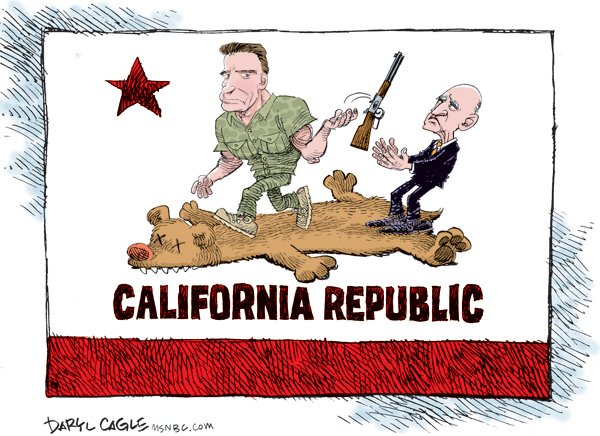
schwarzMonday’s L.A. Times gushed over the “bipartisan” gubernatorial legitimacy Governors Arnold Schwarzenegger and Jerry Brown have given efforts to fight climate change in Paris this weekend. The two former governors “sat for a joint interview to put a bipartisan spin on fighting climate change,” showing the world that green-minded Democrats and Republicans can avoid petty bickering and find a middle ground in combating this great issue of our times.

Here are the juiciest quotes the Times recounts:

“It’s important for people to know that Republicans can work with Democrats and vice versa,” Brown said.

Schwarzenegger added, “That is a very important message for the international community, that they should not look at [climate change] in a political way.”

Bipartisanship for broader goals is all well and good. Of course, the Times doesn’t recount the fact that Schwarzenegger is not, to put it mildly, a typical Republican, and that his participation in “bipartisanship” doesn’t mean much. In fact, on the climate change issue in particular, he arguably toes the liberal line with crossed t’s and dotted i’s. It’s perhaps a little bit ironic that a self-described Rockefeller Republican like myself should accuse a fellow Republican of being a “Republican In Name Only,” but on climate change, because of his joining hands with the green-and-blue liberal policy elite on cap-and-trade, renewables, and other fashionable green boondoggles, it’s hard to categorize Schwarzenegger as anything other than a post-partisan Donkey in Elephants’ clothing.

In an excellent article for the excellent journal National Affairs (read the whole thing) Troy Senik nicely outlines the self-imposed fate of the once-maverick Governor:

“[H]e began marshaling his political capital in the service of nationally fashionable issues like greenhouse-gas reductions. … [I]t began to feel suspiciously like Schwarzenegger was concerned more with buttering up the national media and the Beverly Hills cocktail circuit than actually forging an agenda to pull California back from the abyss.”

So the notion that the Schwarzenegger-Brown stand is anything like meaningful bipartisanship is, by all significant measures, bunk. Most Republicans, moderate or conservative, will rightfully oppose the anti-growth measures that modern environmentalism requires in the crusade against climate change.

Rather than joining hands with fashionable elites in pursuing self-defeating policies that aren’t likely to put much of a dent in carbon emissions, Republicans should live up to their tradition of conservation and environmental stewardship by living up to another one of their great traditions — innovation. Instead of fighting climate change by arbitrarily restricting carbon emissions and pumping money into zero-emissions, zero-results “renewable” sources, Republicans should pursue a climate strategy with what has worked empirically- high-energy, low-emission fuels like natural gas as substitutes for high-emission fuels like crude oil and coal. Peter Wehner and Jim Manzi argued for such a strategy in another article at National Affairs, and their middle ground makes for much more practical policy than either ultra-conservative denials of climate science or mainline liberal worship of cap-and-trade and solar energy.

As Joel Kotkin argues, the Paris climate talks aren’t likely to result in much more than self-righteous gabbing by the elite classes of developed nations, to the detriment of the lower classes of said nations. Developing countries like China and India, by far the largest carbon emitters, are unlikely to shackle their growth to the whims of Western experts and activists. So in the end, Schwarzenegger and Brown’s united stand against climate change will do much for their consciences and little for the climate or the struggling. It remains for another generation of pragmatic politicos to tend to this truly pressing problem. Let’s hope the glittering promise of accolades for “bipartisanship” doesn’t take precedence over reality for them.

esearch associate for the Center for Opportunity Urbanism and Senior Correspondent at Glimpse From the Globe.

Originally published by Fox and Hounds Daily

Should EPA Prosecute Volkswagen to the Fullest Extent of the Law?

If the EPA chooses not to prosecute Volkswagen for its air toxins to the fullest extent of the law, then other automotive companies will violate the EPA’s standards continuously at the detriment of our health, Environment and morality.

Executive Summary & Background

Volkswagen has recently become a ubiquitous conversation topic across global business following its massive scandal.The company not only programmed its emission system deliberately to pass their car’s failed emission metrics; it had done so by carelessly allowing their cars to produce Nitrogen Oxide (NOx; a fairly harmful biohazard affecting respiratory function) by an astounding 40 times the legal limit, and has gone unseen dating back to 2009. Volkswagen has caused virtually irreparable harm to the automotive industry’s transparency, its reputation and to the trust of its “valued” consumers. The EPA should make an example of Volkswagen and fully prosecute them for their negligible actions in order to fully reconcile with the industry they brought much scorn and suspicion to in addition to bringing justice to the public and environment that were negatively affected. Volkswagen should be prosecuted to the fullest extent of the EPA’s authoritative power to such a degree that this punishment serves as precedent that any company willing to pursue such deceptive and illegal measures will be deterred to do so by what VW will have to face. There is an abundance of compelling reasons that support the EPA to embark on these sanctions, penalties and lawsuits to ensure this never occurs again.

Widespread Current Trends of Eco-Awareness from the Public and Consumers Support this Action from the EPA

Often times it is emphasized in our world today that our generation (the youth), the millennial faction, represents and demonstrates the highest degree of activism and awareness in our country to battle and voice our opinions on the wrongdoings that should be brought to justice. We have an overwhelming amount of NGO’s (non-governmental organizations) currently ranging from a general petition-based group such as Change.org to RAN (Rainforest Action Network), which is spearheading the preservation and protection of our rainforests around the world.

With that said, there is a deeply ingrained prevalence of activism efforts in this nation that just so happens to involve a large ecological presence. If Volkswagen genuinely believes that in our current day in age with activism, their efforts won’t cause long-term sustained damage to their sales, reputation, brand-loyalty and stock price, they are surely mistaken because a majority of those aspects of their business have already been significantly impacted in the short-term and can potentially cause long-lasting implications to their bottom line among other negative effects. From a non-economic standpoint, the following intangibles will likely happen or have happened already.

  • Brand Loyalty is not only put into jeopardy, it can also cause deter prospective VW buyers from ever becoming a customer as well as use word of mouth to ensure others don’t buy as well.
  • Reputation not only was temporarily tarnished given that the executive management conspired to deceive the public and the EPA with its quality control of its emissions, but has likely been made to enable a cascading effect for generations to come hearing this story and seeing VW as a deceitful, negligent company.
  • Recall: VW has already publicly stated 500,000 cars will be recalled for further inspection and correction of the programming and emissions. This alone will cost staggering amounts of capital. Luckily, VW set aside $7.4 billion to cover the scandal’s overwhelming amount of financial damage. That number recently was adjusted to 800,000 cars for recall.
  • Stock Price: A substantial amount of investors reneged following the news of VW’s emission/programming scandals, and this will cause their market capitalization to decline greatly (dropped over 20 percent of its value directly after news came out), their stock price to suffer, and the likelihood of future investors to be deterred from investing.

This is a natural fact of life with how our civilization operates. Credibility is an integral part to our society and when that is compromised, it’s generally very difficult to regain that trust from whichever party or group was affected. The following elaborates on the financial aspect in greater detail of what their debacle has led to.

Economic Failures/Consequences

  • Volkswagen recorded its first quarterly net loss ($1.83 billion) for at least 15 years after making great strides to cover the cost of the lawsuits, and vehicle recall expenses following the emission scandal that include nearly 11 million cars worldwide allegedly containing the deceptive software.
  • $16.9 billion dollars according to the Economic Times was “wiped off the market value” of VW. Granted once the CEO, Martin Winterkorn, stepped down, the stock did recover incrementally, showing some positive signs.
  • The EPA has indicated through their reports that Volkswagen faces fines that could total “more than $18 billion.”

With how interconnected our society is, injustices like theirs that are eventually debunked never really end well, and have grave consequences that cause even an established, goliath firm like Volkswagen to derail into a turbulent chaos. This is due to an unrelenting force, which is the rejection, litigation and disgust brought forth by the public and the market that they have successfully sold their products to since 1937. Despite this, companies still continue to engage in deceptive activities to deliberately deceive the EPA time and time again, and if the EPA doesn’t decide to place the highest penalties possible on VW, other companies won’t feel inclined to take them seriously which will create a cascading effect of dissent with the EPA.

What the EPA has done Thus Far in Managing the Emissions Scandal

The EPA has officially issued two notices of violation against Volkswagen adding 10,000 additional affected cars under the Porsche and Audi family, which only escalates the scandal, further denoting that three car companies, all under VW, were affected by the scandal. Not surprisingly, VW officially refuted these claims that the scandal had proliferated to the other two car brands. An assistant administrator of the EPA’s Enforcement and Compliance Assurance department by the name of Cynthia Giles commented, “VW has once again failed its obligation to comply with the law that protects clean air for all Americans.” This is clearly a current issue in our society that companies feel the right or need to cheat the system repeatedly. She goes on to say, “all companies should be playing by the same rules. EPA, with our state, and federal partners, will continue to investigate these serious matters, to secure the benefits of the Clean Air Act, ensure a level playing field for responsible businesses, and to ensure consumers get the environmental performance they expect.” Unfortunately, automotive companies like this that engage in highly illegal and immoral behavior show no remorse or shame in failing to satisfy our expectations and hopes, when we, the public, are the ones purchasing and supporting their company making it financially possible to continue their operations. All the second notice does is add the 10,000 affected vehicles to the massive list, which could spell subsequent fines for VW to pay. Is sending petty fines truly enough to resolve this issues reflecting the entire industry and beyond. It is not just VW that has been caught failing to comply with EPA emission standards and regulations. Regulators and NGOs fear European groups (BMW, GM) are doing the same kind of thing.

The EPA should make a concerted effort to publicly make an example out of VW by restricting their operations, fining them to the fullest extent allowed by law, and try to somehow prohibit them from releasing cars to the entire country if they continue to pollute excessively and defy all standards enacted to prevent health and environmental hazards in the first place. By doing this, the EPA will make a bold statement that they are a federal force not to be trifled with, and that those defectors of these regulations will face intense public scrutiny, enormous financial loss, a tarnished reputation, and endless legal battles that will ensue if companies in this industry follow VW’s example and try to deceive the system put in place. All it is meant to do is to ensure quality for our society and for our environment, and to make sure that we as a civilization are good stewards of the environment and its inhabitants along with genuinely caring about our actions reflecting our values. Unfortunately, this case is just another example of defiance to these basic human values that indicates the EPA must take greater, more drastic actions to mitigate these disasters created by companies like VW.

In contrast, The EPA might be asking too high of standards, making automotive companies feel tempted and even inclined to cheat

In our age, the environmental movement has taken off full steam ahead, leaving the companies that are unable to swiftly adapt to their regulations obsolete and unfit to perform their daily operations. The efficiency, fuel-economy, carbon emissions, and smog tests have been regulated stringently, leaving no room for added pollution in our time of a great anthropogenic crisis of global climate change. Critics of the EPA say the regulations are unrealistic and not generous enough with extending adequate time to these companies being forced to comply with their constantly changing legislation and pollution control mandates.

David Morotta from Forbes magazine argues that the EPA’s general solution to solving issues “must not only solve the problem at hand, but it also must not create a new problem as a result.” He argues that they shouldn’t try to solve the “original” problem, implying an ineffective solution. He goes on to say that “distributed natural systems respond faster, better and smarter than government regulations.” He ends his argument by saying that “further empowering the EPA is a move in the wrong direction. EPA’s nameless and faceless bureaucrats are completely disconnected from any dependence on the people. Delegating regulatory authority to a concept as legislatively vague as sustainability ensures no control can ever be exercised.”

However, what VW did was short-lived, and 6 years after they started this habit of cheating the system, they were eventually caught, exposed, brought to justice and faced numerous business, legal and environmental implications where they are paying a tremendous total amount (exceeding $30 billion) in order to mitigate and reconcile with those affected. These types of scandals in this industry at all costs must come to a screeching halt because if emissions are being mishandled that greatly, who’s to say the other companies aren’t doing this as we speak.

Going the cheating route does cut costs significantly and enhance the company’s main objective; maximize the bottom line. But what about the true external costs of this horrendous event that remain to be seen if they emitted their vehicle’s gases by 40 times the legal amount allowed? Global warming exacerbation, habitat loss due to increases in temperature, health defects, ecosystem contamination and so much more are the result of this irresponsible wasting/pollution. This action that the EPA can make against VW must be done in order to achieve some progress so that the industry doesn’t allow scandals like this to become normative and have the industry and the public become so incredibly used to this that we become desensitized. For the sake of our present and future generations, we cannot allow that to be the case. Forget the politics of it and think about the well-being of us, our children, and future generations, who will have to somehow endure this atrocity.

Citations:

  • “Volkswagen Pushed Into Loss By Emissions Scandal- BBC News.” BBC News. N.P., n.d. Web. 05 Nov. 2015.
  • Marotta, David. “EPA: Green Gone Wild.” Forbes. Forbes Magazine, 13 Jan. Web. 05 Nov. 2015.
  • Nasr, Reem. “Porsche, More Audi Models Pulled into VW Scandal.” CNBC. N.p., 02 Nov. 2015. Web. 05 Nov. 2015.
  • Boston, William. “Volkswagen Emissions Investigation Zeroes In on Two Engineers.” WSJ. N.p., 05 Oct. 2015. Web. 05 Nov. 2015.

Paris Climate Conference a Chance for Jerry and Arnold to Blow Hot Air

It is axiomatic that California’s liberal political leaders would gather in Paris at this sensitive time – to discuss climate change.   And their assertions in Paris about their actual achievements in climate change in California will surely border on bombast.

News reports being put out by the governor’s office tout that California’s “hot” emissions have dropped 7 percent in the last 11 years. But that has nothing to do with Jerry and Arnold’s costly pee-wee war on climate change. The improvement has much more to do with increases in numbers of vehicles on the road that are meeting ever higher federal auto clean air standards, coupled with California’s decades-long stringent requirements on vehicle and fuel emissions. The fact is the air in Los Angeles today is 99 percent cleaner than it was in 1990 and there hasn’t been a smog alert in over 20 years. (The cleaner air today logically even calls into question whether California should continue to regulate the smell of baking bread, for example, under its current and dated clean air regulations.)

Yet none of the accomplishment in the Los Angeles basin will be touted, or has much of anything to do with the additional costly regulations that Jerry Brown will be talking about in Paris on the climate change issue. Jerry and Arnold and the other liberal California politicians will push their climate change policies as “taking a firehose” to the problem. The truth is more like a phrase attributed to William F. Buckley – California’s efforts here are like an “ant farting into a windstorm.” If there is a windstorm.

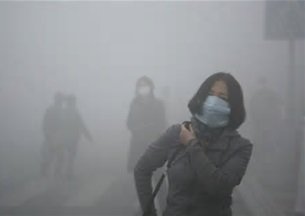
th-3If there is global carbon to be reduced, it comes from China, not so much California, and the Paris conferees would do a lot better for themselves to browbeat the Chinese communist leaders during the entire event, to adopt significant industrial pollution standards, than listen to what Jerry and Arnold have to say about California’s tiny contribution to the world global carbon “footprint” in comparison to China. It is hard to get reliable statistics about Chinese pollution, however, in 2007, the New York Times wrote, “Environmental degradation is now so severe, with such stark domestic and international repercussions, that pollution poses not only a major long-term burden on the Chinese public but also an acute political challenge to the ruling Communist Party.” The article asserted that according to the Chinese Ministry of Health, industrial pollution has made cancer China’s leading cause of death, that 500 million people in China were without safe and clean drinking water, and that only 1 percent of the country’s 560 million city dwellers breathe air considered safe by the European Union, because all of its major cities are constantly covered in a “toxic gray shroud.”

The Chinese pollution, according to the article, has spread internationally: sulfur dioxide and nitrogen oxides fall as acid rain on Seoul, South Korea, and Tokyo; and according to the Journal of Geophysical Research, the pollution even reaches Los Angeles. But even with the Chinese pollution coming our way, California’s environment has greatly improved over the last decades and it has little to do with Jerry Brown’s new intentions to levy even more consumption taxes on working and poor families, raising their cost of living, their utility bills, and the cost of basic necessities, for some sketchy sort of de minimus attack on global carbon. In the meantime Chinese pollution has certainly gotten worse.

Finally, it is simply a lie for Jerry and Arnold to say in Paris, as they will, that the new California carbon regulations have been implemented without hurting the state’s economy. In the same period these new carbon taxes have come online, California has seen significant increases in the cost of living, reduction in disposable income for average families, and the highest poverty rate in the nation for what looks to be three years running. California’s carbon taxes are making our poor, poorer. And that deserves much more focus than falsely premised victory laps in Paris.

Brown marches California climate agenda to Paris

As reported by the San Francisco Chronicle:

When Gov. Jerry Brown lands in Paris next week for international talks on climate, he’ll be preaching the need for action — and not to solve a hypothetical or future problem but something immediate.

The governor has increasingly tied California’s run-ins with nature, by way of drought, wildfire and rising seas, to human-caused warming. And he shares global concerns that havoc will ensue worldwide if the issue is put off any longer.

“I get that the majority in Congress, leaders in the House and Senate, half the governors, want to say, ‘No, there’s nothing going on.’ But that doesn’t change the science,” Brown said in an interview with The Chronicle this week. “If a building is burning down, you don’t sit there and get frustrated, you get a fire hose and put it out.”

Brown is scheduled to join leaders from more than 120 nations at …

Click here to read the full article

Brown Linked Climate Change to CA’s Wildfires. Scientists Disagree.

As reported by the Los Angeles Times:

The ash of the Rocky fire was still hot when Gov. Jerry Brown strode to a bank of television cameras beside a blackened ridge and, flanked by firefighters, delivered a battle cry against climate change.

The wilderness fire was “a real wake-up call” to reduce the carbon pollution “that is in many respects driving all of this,” he said.

“The fires are changing…. The way this fire performed, it’s not the way it usually has been. Going in lots of directions, moving fast, even without hot winds.”

“It’s a new normal,” he said in August. “California is burning.” …

Click here to read the full story

Citizens Exhausted By Renewable Hypocrisy

Exhaust is what was emanating from the idling three ton SUV bearing state license plates sitting at the curb outside the Griffith Observatory. The parked vehicle’s engine continued to run for over an hour, according to news reports.

Inside the observatory, overlooking downtown Los Angeles, a ceremonial signing of major legislation was taking place. Amidst self-congratulation by members of the political class in attendance, Gov. Brown added his signature to legislation mandating that half of California’s energy come from renewable sources within 15 years.

car exhaust1The bill by Senate Pro Tem Kevin de Leon, a Los Angeles Democrat, originally contained language requiring a 50 percent reduction in petroleum use by 2030. This draconian feature contained no specific formula for reducing gasoline use, leaving it up to the unelected California Air Resources Board to implement restrictions that could have included massive fees, gas rationing or driving restrictions. Moderate Democrats and Republicans united in opposition to adding to the burden on working families already paying the highest gas prices in the nation, and de Leon was compelled to remove the restrictions on petroleum use.

Brown has blamed lobbying by the oil companies – not the thousands of angry constituents who called their representatives — for the Legislature’s failure to cut back gasoline use and he has promised to implement the restrictions using CARB, whose 12 members are appointed by the governor.  (Just approved legislation will allow the Legislature to approve two members.) This approach of going around lawmakers, who represent the people of California, is reminiscent of President Obama’s using executive orders to circumvent Congress in order to make changes to the Affordable Care Act and to halt enforcement of immigration laws.

Even without the de Leon legislation, the state has the nation’s highest air quality standards and, due to legislation passed in 2006, a third of electricity is required to be provided by renewables by 2020.

The problem remains that California has a weak economy and stringent restrictions on energy production will add to the cost paid by average citizens. Many see this legislation as overly severe and agree with State Senator Jim Nielson who has stated that energy, food and all things that require abundant affordable energy to produce and transport will become more expensive, hurting California families least able to afford it.

Meanwhile, back to the SUV sucking up taxpayer financed gasoline: After chatting with reporters for nearly an hour after the signing ceremony, Senator de Leon entered the vehicle and was driven away. It was a hot day and, no doubt, the senator enjoyed entering an air conditioned interior as he was about to be chauffeured to his next appointment.

Although we didn’t get a close look, it would not surprise us if there were a bumper sticker on the back the senator’s ride that read, “Do as I say, not as I do.”

Originally published by the HJTA.org

Jon Coupal is president of the Howard Jarvis Taxpayers Association — California’s largest grass-roots taxpayer organization dedicated to the protection of Proposition 13 and the advancement of taxpayers’ rights.