Assembly Democrats Want Real Estate Fees, Tax Credits for Affordable Housing

As reported by KQED:

The leader of the state Assembly is unveiling an ambitious affordable housing proposal, one that could pump more than $600 million a year into  development at the local level.

Assembly Speaker Toni Atkins (D-San Diego) was joined Wednesday afternoon by a wide range of prominent Democrats in Los Angeles, including state Treasurer John Chiang and Los Angeles Mayor Eric Garcetti, to announce her plan. At its center: A proposal to institute a new transfer fee on real estate transactions, one Atkins’ staff characterizes as small; and expanding legislation proposed by Assemblyman David Chiu (D-San Francisco) to increase the tax credit that real estate developers can claim when they build affordable housing.

“The bottom line is that every Californian deserves a stable, safe place to live,” Atkins said.

Click here to read the full story

Why Don’t California Lawmakers Want Residents to Buy Earthquake Insurance?

“California Rocks.” That’s the clever slogan for a new advertising campaign by the California Earthquake Authority (CEA), the state’s privately funded, publicly managed earthquake insurance fund. The message is both an allusion to the Golden State’s culture of musical cool and a literal statement of fact: California is earthquake country. The state experiences hundreds of tiny temblors every day that most people never notice. But it’s only a matter of time before a destructive quake rocks the Golden State. The Southern California Earthquake Center estimates that the state has a 99.7 percent chance of experiencing an earthquake of magnitude 6.7 or greater within the next 23 years. Yet, thanks to shortsighted public policy, only about one in ten Californian residents holds an earthquake-insurance policy.

Until recently, California’s insurers struggled to align their premiums with the actual peril that earthquakes represent. Insurance companies discovered after the 1994 Northridge earthquake that their estimates had been much too low. That magnitude 6.7 temblor killed more than 60 people, injured 9,000, damaged and destroyed thousands of buildings, and left parts of Los Angeles’s freeways in ruins. The losses suffered by insurers—$12.5 billion in all—were greater than the sum of earthquake insurance premiums they’d collected over the previous 25 years.

Politicians have always recognized that earthquakes pose a long-term problem, but their solutions have tended to be ad hoc and counterproductive. Two developments in particular made earthquake insurance less attractive to California homeowners. First, in 1985, the state took the unusual step of mandating that insurers offer earthquake insurance anytime they sell a residential insurance policy. At the time, an estimated 5 to 7 percent of homeowners had earthquake insurance. Publicly, legislators maintained that the goal of linking residential policies with earthquake policies was to raise awareness of earthquake insurance and encourage more people to purchase private coverage. But the underlying reason for the mandate was a state court decision that dramatically expanded insurer’s civil liability for damages not covered under existing policies.

The legislature had at least two choices in responding to the court’s ruling: take a free-market approach while limiting liability, or link the earthquake insurance to residential policies. Lawmakers went with the second, with the encouragement—later regretted—of some in the insurance industry. Insurers believed that most customers would turn down an offer of earthquake insurance, seeing it as an expensive option to hedge against a remote risk; meanwhile, the insurers would have insulated themselves from liability. In fact, the problem worsened: after Northridge, spooked insurers scrambled to limit their exposure to future quakes by refusing to sell residential policies. As a result, the real estate market ground to a halt.

In 1996, looking for a way to get insurers to issue policies again, legislators established the state earthquake authority, which offers earthquake insurance to satisfy the 1985 law. Participating insurers fund the CEA by pooling premiums in the state fund. The CEA’s earthquake insurance is better than what came before, but it’s still expensive, with high deductibles and limited coverage. So it’s unsurprising that only 10 percent of homeowners today are willing to pay for it.

The best way to control costs related to earthquake damage is to restrict development in earthquake-prone areas, but that opportunity passed long ago; the most dangerous areas in California are among the most densely populated. The most realistic and effective way to control earthquake exposure is to distribute the risk privately. Privately financed insurance policies aren’t susceptible to the political whims of state officials and regulators. They have the added virtues of scale, speed, and sensitivity to individual claims.

State senator Bill Monning, a Democrat from Carmel, has taken the lead on reforming the CEA and seeking ways to encourage more homeowners to buy insurance. But he’s found little support from his fellow Democrats. The best Monning could manage last session was a resolution encouraging Congress to pass the Earthquake Insurance Affordability Act, a taxpayer-funded insurance backstop. If lawmakers really wanted to see the public covered, they would liberalize the state’s insurance market and compel companies to innovate and compete. If they considered earthquake peril a statewide risk worthy of universal sacrifice, they might even make buying earthquake coverage a requirement for obtaining a mortgage, not unlike the mandate to purchase flood insurance in flood-prone areas. But until such changes come into effect, homeowners and taxpayers will wind up paying a steep price when California rocks again.

Proposed Bill Will Force Parents to Choose: Vaccinate or Homeschool

The measles outbreak has injected the California Legislature with a new urgency in dealing with vaccine issues. First up is a new bill, as yet without a number, by state Sens. Ben Allen, D-Santa Monica, and Richard Pan, D-Sacramento, the latter a pediatrician.

According to Pan’s website, the bill “will repeal the personal belief exemption that currently allows parents to effectively opt their child out of vaccines in our schools.” Under the exemption, “a parent may choose to opt their child out of school vaccine requirements that bi-partisan legislative majorities passed to protect students.”

As the Sacramento Bee reported, the vaccination issue has roiled California in unexpected ways, with “anti-vaxxers” cutting across familiar ideological and political categories. “I’m a registered Democrat, but that could possibly change,” one parent told the paper. “I could never be with a party that mandates, and takes away freedom from people.”

But Republicans have been wary of championing residents seen as directly responsible for the outbreak of major diseases. Some GOP officeholders in Sacramento have begun to reverse their earlier support of California’s relatively broad personal belief exemption, which extends beyond a carveout for religious beliefs. Others have reaffirmed a measured commitment to both vaccination and parental choice.

According to the Los Angeles Times, however, the bill would nevertheless extend some political cover to conservatives whose constituents favor close parental control of medical choices:

“The legislation does not address children who are completely home-schooled. It would still allow children to avoid vaccination for medical reasons including allergic responses and weak immune systems. The mandate only applies to children attending public or private schools.”

Democratic divisions

Perhaps surprisingly, Republicans may have already felt the worst of the political awkwardness — while Democrats face more internal disagreement. As the Wall Street Journal reported, “Dr. Pan wrote a 2012 law that went into effect last year that required a consultation with a health care practitioner to obtain the personal belief exemption. Gov. Jerry Brown added an exemption based on religious beliefs upon signing that law.”

Now, Brown’s office has indicated the governor is open to erasing the personal belief exemption.

Both California’s U.S. Senators, Democrats Barbara Boxer and Dianne Feinstein, also have urged their fellow party members to consider eliminating the religious-belief exemption. In a letter to California Health and Human Services Secretary Diana Dooley and other officials, the senators set out an uncompromising position:

“California’s current law allows two options for parents to opt out of vaccine requirements for school and daycare: they must either make this decision with the aid of a health professional, or they can simply check a box claiming that they have religious objections to medical care. We think both options are flawed, and oppose even the notion of a medical professional assisting to waive a vaccine requirement unless there is a medical reason, such as an immune deficiency.”

What’s more, Boxer and Feinstein went after parents who sought modified or delayed vaccination schedules even for preschool children — a move that could unsettle the swift but fragile bipartisan consensus forming around the Pan-Allen bill.

As BuzzFeed reported, the response among Democrats has not been as crisp and confident as Boxer and Feinstein might have hoped:

“Several liberal lawmakers unequivocally said parents should vaccinate their kids. But when pressed further on the state laws that allow parents to skip vaccinating their children if they have a medical, religious, or ‘personal belief’ reason not to do so, their answers became less clear.”

Nationally prominent California Democrats, from Rep. Maxine Waters to House Democratic Leader Nancy Pelosi, couched their language in a way that steered clear of Boxer and Feinstein’s vaccination absolutism.

The office of California Attorney General Kamala Harris — who hopes to replace Boxer in the Senate — declined to answer any questions about Harris’s own stance.

Originally published on CalWatchdog.com

Sen. Leno’s “Income Inequality” Lost Cause

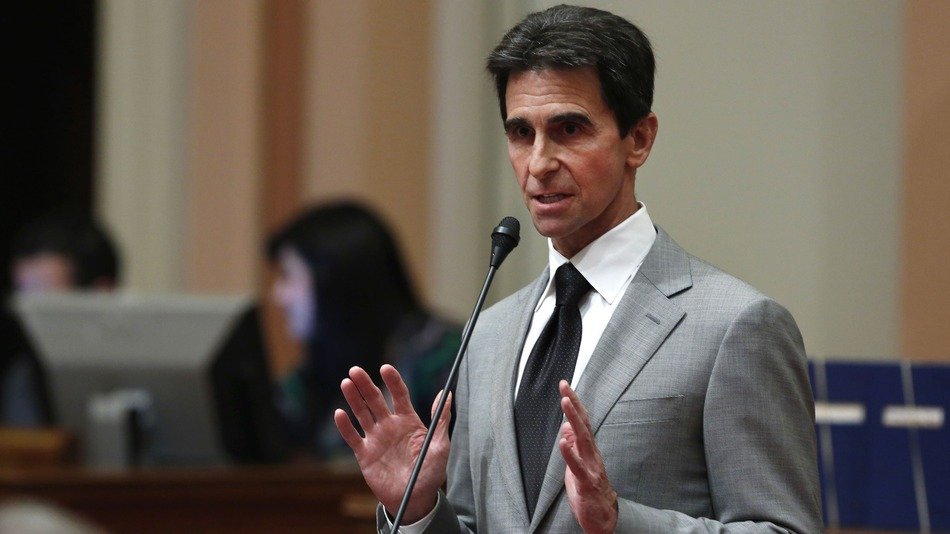
California’s minimum wage is set to rise to $10 an hour on January 1st of next year. But for Senator Mark Leno (D-San

CA Senator Mark Leno, D-San Francisco

CA State Senator Mark Leno, D-San Francisco

Francisco), this already-dramatic wage hike isn’t nearly dramatic enough.

Citing an “income inequality crisis,” Sen. Leno has called for a minimum wage increase to $11 an hour in 2016, followed by another jump to $13 an hour in 2017. Unfortunately for the senator, the evidence suggests a hike in the base wage will do very little to solve this crisis — and might even make it worse.

San Francisco, which Sen. Leno represents, has one of the highest minimum wages in the country — and one of the country’s most dramatic gaps between the rich and the poor. (One analysis last year compared the city’s inequality level to that in a developing nation.) City voters in November resolved to fix this problem by approving a proposal to raise the city’s minimum wage even higher, to $15 an hour, by 2018.

Thus far, the looming $15 minimum wage only seems to be worsening the city’s inequality crisis. Several small business owners have been forced to close their doors as a consequence of the coming cost hike, hindering their own entrepreneurial dreams and those of the people they employed. This trade-off isn’t unique to San Francisco. If you’re an employee working at a business with small profit margins, your employer will be faced with one of two difficult choices when the minimum wage goes up: Either raise prices, or cut labor costs by reducing staffing levels or employees’ hours.

If the wage goes up and the terms of your employment don’t change, you may be better off; if you lose job and your co-workers do, too, then you’re most certainly worse off. That means Sen. Leno’s plan for a statewide $13 minimum wage will create winners and losers in the entry-level workforce. Unfortunately, a team of economists writing in the Journal of Human Resources discovered that the “losers” from a wage hike — employees who are pulled below the poverty line, or at least closer to it, as a consequence — outnumber the “winners.”

Put differently: Instead of redistributing income from the top 1 percent, Sen. Leno may unintentionally redistribute it among the bottom.

The Senator’s office has pointed skeptics to comforting studies from a team of ideological researchers at the University of California-Berkeley, suggesting that the negative impact of a higher minimum wage in California—both on the city level, and statewide–would be minimal or nonexistent. But the Berkeley team’s estimates are looking less and less credible in the face of real-world evidence.

In San Francisco, for instance, one bookstore reported that the $15 minimum wage would cause a fatal 18 percent increase in operating costs—90 times greater than what UC Berkeley projected for city retailers. And in Oakland, where the minimum wage is rising to $12.25, restaurants are reporting price hikes of up to 20 percent—far greater than the 2.5 percent that the Berkeley team predicted.

These real-world examples are no doubt unsatisfying to the most dedicated ideologues, and it’s unsurprising that one of the Berkeley researchers insinuated employers might not be telling the truth. But spin like this only goes so far, especially in the face of real flesh-and-blood employees who no longer have jobs.

If Sen. Leno is serious about reducing income inequality and increasing opportunity, he owes it to the California residents who need those opportunities to examine the best way to help them. That starts by acknowledging that we should judge public policy by its outcomes rather than its intentions.

Michael Saltsman is research director at the Employment Policies Institute

Bill would cap large payouts to school superintendents

As reported by the San Francisco Chronicle:

SACRAMENTO — A California lawmaker wants to limit the generous — sometimes six-figure — payouts that school districts award school superintendents who leave their jobs.

Assemblyman Luis Alejo, D-Watsonville, said the state needs to reduce the severance pay school districts — and ultimately taxpayers — give superintendents who are terminated or voluntarily leave before their contracts expire. School boards typically negotiate severance deals with superintendents that equal about 12 to 18 months worth of pay. The state already caps such cash settlements at 18 months.

But increasingly, school boards are approving 18 months of severance in superintendent and other high-level administrative contracts. One Bay Area school leader collected a $600,000 payout in 2013. …

Click to read the full story

Government fails to earn respect of Californians

Nine out of 10 Californians believe state government wastes their tax dollars. Two-thirds believe state government is run for the benefit of a few special interests and state officials cannot be trusted to do the right thing.

Those results from a Public Policy Institute of California survey are similar to the dissatisfaction with and distrust of state government that Californians expressed 10 years ago. The reason for that disaffection and what should be done about it was the focus of the Jan. 22 meeting of the state watchdog agency the Little Hoover Commission.

The findings in the survey of 1,704 adults conducted from Nov. 10-17 (with a sampling error of 3.7 percent):

  • “Do you think the people in state government waste a lot of the money we pay in taxes, waste some of it, or don’t waste very much of it?” 54 percent – waste a lot, 35 percent – waste some of it, 8 percent – don’t waste very much of it. Seventy-eight percent of Republicans, 60 percent of independents and 46 percent of Democrats believe state government wastes a lot.
  • “Would you say the state government is pretty much run by a few big interests looking out for themselves, or that it is run for the benefit of all of the people?” 67 percent – run by a few big interests, 28 percent – run for the benefit of all of the people.
  • “How much of the time do you think you can trust the state government in Sacramento to do what is right?” 61 percent – only some of the time, 25 percent – most of the time, 7 percent – just about always, 5 percent – none of the time.

The results were similar for all three questions across regional and demographic groups and similar to a survey conducted a decade ago. But they are slightly better than an even worse skepticism of state government in an October 2010 survey.

Federal and state governments

State officials can take minor consolation that Californians are even more skeptical about the federal government. On the other hand, Californians are less distrustful of local government, particularly in the area of wasting tax dollars, according to a May 2011 PPIC survey.

“In summary, negative perceptions about the effectiveness, responsiveness and efficiency of state government are pretty consistent over time and widely held in the public today,” PPIC President/CEO Mark Baldassare told the commission. He listed four implications of the results:

  • “Californians will continue to value the citizens’ initiative process as they seek to have a say in the major decisions made by their state government.
  • “Many Californians will be skeptical about the need for higher taxes and more state revenues, given their feelings about waste.
  • “Proposals to move authority and control to the local level from the state level are the kinds of proposals that will resonate with Californians today.
  • “Last but not least, civic disengagement will continue to be a problem. The kind of civic disengagement that we saw in the record low turnout in last year’s election. And we may not have seen the lowest of low turnouts yet, given the disengagement Californians feel from state government today.”

Only 30.9 percent of California adults voted in the Nov. 2014 general election and just 18.4 percent in the June primary, according to Baldassare, who said in his blog: “Millions of Californians who could register to vote did not, and millions of Californians who could vote opted out. These numbers clearly point to a California public that is disconnected from their state government today.”

Hopeful

But Baldassare, perhaps anticipating the PPIC survey released this week showing increased optimism that the state is heading in the right direction, closed his remarks on a more hopeful note.

“In the wake of a growing improvement in our economy and fiscal situation, which has led to higher approval ratings of the governor and Legislature than we’ve seen for several years, and also at a time when we’ve just gone through a series of major legislative and fiscal reforms that the voters have approved in recent elections, the public is signaling their support for those reforms as well as efforts to move some activities from the state to the local level through both the local control of school funding and our corrections realignment,” he said.

Asked to explain the reasons for residents’ disconnection with government, Baldassare said part of it is a general skepticism of all institutions, particularly by independent voters. He added it’s also due to Californians’ unsatisfactory experiences dealing with state government. “They do have real experiences which confirm these broadly held beliefs,” he said. “That’s where you have control.”

The question of what the state can do to win the confidence of residents became the focus of the rest of the 2½-hour hearing.

“We should focus on the things which state government can directly affect,” said Commissioner David Beier. “To me that’s the building of trust through the delivery of governmental services. One of my business school colleagues said, ‘Building trust is a question of two things: intention and competence.’ I don’t think anybody has any question about the intention of state officials to deliver high quality services and positive outcomes.

“The question is one of competence. And it’s not a question of the qualification to deliver high quality goods and services. There are better, smarter ways to deliver service. And if we can identify the top agencies and the frequency of interaction with citizens, I think we can affect at least that component of government trust.”

DangerfieldNo respect

A big part of the problem is that the message Californians receive from state government, whether via the Internet or waiting in line at the DMV, is that state officials don’t respect them, according to Cyd Harrell, a user experience expert with Code for America, which specializes in government technology.

“Design sounds like icing on the cake or making things pretty,” she said. “But at the core, design is creating an effect on purpose. People compare the best the private sector has to offer in the same space, the five-inch screen, where it gets Facebook, Amazon or an online game. When the government experience doesn’t live up to the level of experience of the other institutions they interact with, there’s an assumption that the effect is being created on purpose.

“That’s part of where that distrust in government comes from. There’s an assumption that if I have difficulty reading it or difficulty filling out a form or it doesn’t speak in a language that I easily understand, then that’s an effect the government intends, or at least is comfortable creating as part of the design.

“In the private sector, we have companies competing to offer people the best experience for their money. Government is different, naturally. If I don’t like the experience of interacting with the government when registering my car or seeing if I’m eligible for benefits, I can’t exactly take my business elsewhere. So in some ways that can be seen as a free pass [for government officials]: ‘Don’t worry about it, where else can they go?’

“But I truly think there’s a moral imperative. Government needs to serve all of the people. It needs to offer them experiences that respect their time and dignity and their abilities, whatever those may be.”

Currently, few government agencies practice what Harrell calls human-centered design. But she said it’s not that expensive to implement. It just takes commitment from top government officials to want to do it. “So the critical thing, in my opinion, is a mind shift,” she said.

Worst enemy

Other experts at the meeting agreed that government is often its own worst enemy when it comes to working smarter and better. Bob Stone, a performance adviser for the city of Los Angeles, provided an example of the Los Angeles Fire Department’s procedure for providing two replacement pieces of uniform for each firefighter annually.

“If you were to be awarded two pieces of clothing, most people would go to the Internet, Amazon or Wal-Mart and they would buy it,” said Stone. “What the city does: the firefighter fills out a form, gets a supervisor to approve it, gets a station chief to endorse it. It’s sent to the battalion chief across town, he endorses it, sends it to the procurement office. They gather up all these things and put in an order with the supplier. A big box of supplies comes into the central yard. We pay somebody to unpack the boxes, and these go to Van Nuys and these to San Pedro, send these to West Los Angeles. That’s the way we do things.

“It’s crazy. It was a sensible way to do things in the 1950s. What they are doing, and they are going to start hopefully in the next month, they are going to give the supplier a list of fire department members who have this entitlement. And they are going to tell each of these people, ‘You’re entitled to two pieces of clothing that we’ll pay for. Go to the supplier’s website, they know who you are, identify yourself and order what you want. If you want more than two, you can buy whatever you want, you just have to pay for it. We’ll pay for the first two.’

“And this happened because we told the people that were working there, ‘Don’t do anything crazy on purpose. We do enough things crazy by accident. If you’re doing something dumb, stop it and do something smart.’ So they did this. And I’m hopeful that there are going to be thousands of examples like this.”

The Little Hoover Commission plans to submit its recommendations to the state in a report, probably later this year.

Originally published by CalWatchdog.com

CA Analyst Warns Against Budget Spending Spree

With California’s state budget in the best shape in years, Democratic legislators are eager to open the spending spigots. But they were cautioned at an Assembly Budget Committee hearing Jan. 15 that the good economic times could end as quickly as they began, plunging the budget back into the red.

Legislative Analyst Mac Taylor warned the committee that California’s budgetary revenue is among the most volatile in the country for fiscal year 2015-16, which begins on July 1.

As a result, he considers the $3.4 billion rainy day reserve fund in Gov. Jerry Brown’s $113 billion budget proposal to be minimal. He’d prefer a 10 percent reserve.

“You need to think in terms of having a large reserve,” Taylor said. “I appreciate the pressures that you have on you from various groups. I would hope that that [$3.4 billion reserve fund] would be sort of a floor and hope that maybe you could build on that.

“Because a downturn is coming in the near future. We don’t think it’s next year. California is growing well, but things can happen. And the more that you have the reserve, the less disruptive it is to you in making these sort of terrible short-term budget adjustments.”

That downturn is overdue, warned Keely Bosler, chief deputy director of the California Department of Finance. She noted that the country is “nine months past the average length of an expansionary period in the post-World War II era. Our economic forecast does not predict a recession, but economists rarely do. So there is a threat. The economy does continue to grow at this time, though.”

Obligations

Committee Vice Chair Melissa Melendez, R-Lake Elsinore, argued the rainy day fund should be much larger.

“The bipartisan new rainy day fund will accumulate a portion of volatile capital gains revenue so that we can use these funds during the next recession when Californians need services most,” she said. “However, it may not be enough. The governor proposes savings that amount to 2 percent reserve of all expenditures. In 2008-9 alone general revenue dropped 20 percent.”

Melendez also believes the state should prioritize taking care of its existing obligations.

“The governor has been a vocal advocate of paying down debt,” she said. “And for that we are very pleased. This budget proposes debt payments to our schools, cities and counties. Yet even under this proposal, we are concerned that we may not be eliminating enough debts and liabilities. Hundreds of billions in pensions and retirement liabilities loom, and repaying these needs to be a priority.”

There are additional constraints looming on the budget. Bosler noted state budget revenue will be taking a hit when the temporary Proposition 30 quarter-cent sales tax and “millionaire” income tax hikes begins phasing out at the end of 2016. “The budget is precariously balanced, especially over the forecast period, which is through 2018-19,” she said.

“But also over that same forecast period we are also going to be facing increased expenditures in the state’s general fund. One of the larger ones is the fact that we will be taking on a share of costs of the optional Medi-Cal expansion that was a part of the [Obamacare] health care reform. And those costs will be a billion dollars by the end of the forecast period.”

More than 12 million Californians, nearly a third of the state’s population, are projected to be receiving Medi-Cal benefits in the coming year, Bosler said. “Also, we’re seeing increased costs in that program, mainly related to administrative actions taken by the federal government.”

The state plans to spend an additional half-billion dollars in the coming year to fight wildfires caused by the ongoing drought, she said. And hundreds of millions more will be spent on entitlement programs for illegal immigrants granted federal amnesty – a cost that has not been built into the budget.

“Even though the budget is balanced and we do have the rainy day fund, there do continue to be other risks to the budget that we remain concerned about,” said Bosler.

Prop. 98

Taylor told the committee that much of the extra revenue in this year’s budget has already been slated for K-12 schools in order to comply with the Proposition 98 spending mandate. “They have brought up their revenue estimates by roughly $2.5 billion – almost all of it goes to schools,” he said.

“For some [legislative] members and a lot of people out there in the public, they have a hard time understanding how that can be. ‘How come there’s no money available for other priorities in the budget?’ You’re going to have to explain to your advocacy groups and constituents why is it that you can have funding going up by $4 billion and none of it’s available for non-98 purposes.”

Taylor warned this year’s budgetary boom could actually lead to a bust in future years.

“If we have this kind of revenue surge, you’re going to permanently increase your [Prop.] 98 obligations,” he said. “If it’s a temporary surge and your capital gains and other revenues fall down to lower levels in subsequent years, you could actually be worse off in your 98 budget. Because you would be committed to higher 98 spending and won’t have monies left over, and may actually have to take a hit to your non-98 portion of your budget.”

More spending

Despite the cautionary advice, most of the committee Democrats argued for spending more money on expanding social-service programs. They were led by Committee Chair Shirley Weber, D-San Diego.

“This state still suffers from a high level of poverty,” she said. “California has the highest rate of poverty of any of the states in the nation. We have thousands of underemployed and unemployed Californians who should be contributing to our economy today. And we have thousands of children who are home who should probably be in early child development programs for learning. This is an unfunded poverty liability.

“Last year’s budget demonstrated the fact that we do have the capacity to do some of those things to address some of the poverty issues in this country and begin rebuilding California in a stronger and more thoughtful way.”

She was seconded by Assemblyman Kevin McCarty, D-Sacramento, who said, “I know there’s a lot of angst that not enough was done in this budget to reinvest in critical programs in California.” He argued for more funding for early childhood education, noting that only 4,000 slots are opening up this year in the program, despite interest from 25,000 families.

Assemblywoman Nora Campos, D-San Jose, also argued for more funding to address poverty, especially for preschool children. “Child care, child investment development – this is a priority for quite a few members in the Assembly,” she said. “When we talk about investing in K-12, there’s also a huge movement on what we are doing to invest in [ages] one-to-four to one-to-five. So that by the time they get to K[indergarten] they are ready to move forward.”

Assemblyman David Chiu, D-San Francisco, wants to provide state funding for affordable housing: “The governor mentioned that housing growth has slowed at the same time housing prices have increased significantly around the state. California is the second least affordable state in the country. Many parts of the state are in the midst of significant affordable housing crises.”

Bolser, noting that an affordable housing project in San Francisco cost $500,000 per unit, said that it would be quite expensive tackling that problem throughout the state. “This is obviously something you could put a lot of money into and would not make a very large dent in the problem,” he said.

The Assembly and Senate budget subcommittees will spend the next four months studying and revising the budget. The California Constitution requires the budget to be passed by June 15.

According to Proposition 25, which state voters passed in 2010, only a majority vote of each house of the Legislature now is needed to pass a budget, except for tax increases.

This article was originally published on CalWatchdog.com

Sacramento Aims To Police The Police

After a politically punishing year for law enforcement departments from Los Angeles to New York, California legislators are riding the wave of controversy, drafting a spate of bills that would use the power of state government to assert more control over how police officers do their jobs.

The move exploits an unusual situation that has developed in Gov. Jerry Brown’s administration. When it comes to criminal justice, Brown’s attention is largely consumed with “realignment” — his effort to satisfy a series of court orders on prison crowding by shifting inmates, costs and responsibilities from the state’s prisons to county jails.

But Attorney General Kamala Harris sees police conduct as central; in her inauguration address, she drew special attention to what she called a statewide “crisis of confidence” in law enforcement, driven by a “string of injustice” running through urban and minority communities.

There have been bumps in the road even for Harris, however. “While Harris’ office recently launched a plan to investigate and improve bias and use-of-force training for law enforcement, the Lawyers’ Committee for Civil Rights has criticized her for pushing back against demands for an independent prosecutor to handle cases of police brutality,” ThinkProgress observed. Politically unable to fully rebuke or embrace Brown’s realignment plan, Harris has also struggled to steer clear of the controversy that surrounds it.

But with Harris now a formidable 2016 contender for the U.S. Senate seat to be vacated by Sen. Barbara Boxer, D-Calif., state legislators face a moment of opportunity, support and attention historically rare for would-be police reformers.

A unified front

With plenty of ideas to go around, Sacramento Democrats are able to push for their own particular proposals, while maintaining a cohesive approach to policy. Assembly Bill 86, drafted by Assemblyman Kevin McCarty, D-Sacramento, takes advantage of Harris’ influence and sympathy. As NBC San Diego reported, the bill “would create a law enforcement panel, likely within the state Attorney General’s office, to study each case of a California police officer fatally shooting someone and write reviews or issue recommendations.”

Other legislators have focused on related pieces of legislation. According to U-T San Diego, Assemblyman Freddie Rodriguez, D-Pomona, is at work on two key bills.

The first, an early draft of AB69, would mandate police body cameras throughout the state. (Steve Soboroff, president of the Los Angeles Board of Police Commissioners, has taken an early lead implementing the technology.)

The second, AB71, would expand federal data collection on California crimes. Currently, U-T reports, the Justice Department gathers self-reported data from law enforcement on “civilian deaths in police custody, including race.” AB71 “would expand that data collection to include non-fatal shootings and injuries sustained by police officers.”

At the same time, Assemblywoman Shirley Weber, D-San Diego, is advancing AB66, designed to create a unified set of standard practices for body camera use in California police departments. Body cams are already in use in Weber’s district. So far, the city has already introduced 300 cameras into central and southeastern San Diego.

Up for grabs

For Republicans, the political landscape surrounding policing offers risks and opportunities. In California, the GOP’s overarching position could well be up for grabs.

Nationally, Republicans have begun to adopt a more clement attitude, thanks in part to striking figures that show crime at significant lows. As Sen. Charles Grassley, R-Iowa, told The New York Times, “There are a lot of ideas — prison reform, policing, sentencing — being discussed now that wouldn’t be if we hadn’t had this drop in the crime statistics.”

The Senate’s leading unorthodox Republicans, such as Mike Lee, R-Utah, and Rand Paul, R-Ky., carry considerable favor among California’s libertarians and libertarian-leaning Republicans. Paul is considered a contender for the GOP nomination for president in 2016.

In the absence of a strong stance from within the state, Lee and Paul’s support for prison reform could supply California Republicans with adequate political cover to advance some proposals of their own.

This article was originally published on CalWatchdog.com


Why Not Let People Vote For Whomever They Want?

What would it take to reverse the trend of voter turnout? The real answers to that question – partisan local elections, a reversal of the top two disaster (and the resulting voter confusion, expensive campaign nastiness, and party weakness), elections on weekends, loosening all the constitutional rules that take issues off the table – are considered politically unrealistic. In part because reformers supported reforms that discourage voting, and being a reformer means never having to say you were wrong.

Since this is California, you’ve probably got to start with a small step. So here it is: Restore to voters the power to vote for whomever they choose.

Didn’t know that that power had been taken away from you? It was – back in 2012 when a law, designed to implement top two, abolished write-in voting on the November ballot for partisan offices (president being the exception). The change didn’t get much attention at the time, but it eliminated one more reason for people to vote. There never were a lot of write-ins, but we’re told that every vote counts. And every vote counts more when so few people are voting.

Scrapping write-ins eliminated a California political tradition. As Richard Winger of Ballot Access News pointed out in an email, Californians elected a write-in candidate to Congress three times in a general election:  1930 (won by the son of a Sacramento Congressman who died in office), 1946 (when William Knowland won the last couple months of Hiram Johnson’s last U.S. Senate term), 1982 (Ron Packard).  In eliminating write-ins, California went against the grain. According to Winger, California is the only state besides Louisiana that ever had write-ins and abolished them.  There are four states that have never had write-ins:  Nevada, South Dakota, Hawaii, and Oklahoma.

Why should we bring write-ins back? For reasons of democracy and engagement. Minor parties that have been shut out of November elections by top two would have an incentive to campaign, and bring voters to the polls, since they’d have the write-in option. Write-ins also provide a way to make sure that voters of a major party aren’t shut out when two candidates of the same party advance in the top two. (Write-ins also could serve as a check on the crazy first-round election results that top two sometimes produces.)

There’s an ongoing legal challenge to the top two alleging that it violates the rights of voters who want to cast ballot for minor party candidates in November (a hearing is currently scheduled for Jan. 15 in the State Court of Appeals in San Francisco). But why wait for the courts? The legislature could act to restore choice on the ballot, and give at least a few more voters a reason to show up.

This article was originally published on Fox and Hounds Daily

Joe Mathews is a Connecting California Columnist and Editor, Zócalo Public Square, Fellow at the Center for Social Cohesion at Arizona State University and co-author of California Crackup: How Reform Broke the Golden State and How We Can Fix It (UC Press, 2010)

California Comeback or Continuing Crisis?

As the California Legislature reconvenes this week for the new session, Californians will hear two decidedly different messages from both politicians and political pundits about the “state of the state.”  Governor Brown will surely tout the “California comeback” and argue that the state is in much better fiscal health than just a couple of years ago.  On the other hand, more conservative voices will argue that California remains in fiscal crisis, that our system of governance is still fundamentally flawed and that those who believe the state is on the right track are simply fooling themselves. So who is right, the “declinists” – as Governor Brown has labeled some of us in the latter group – or the “delusional” in the former?First, in the “comeback” camp, there is no denying that California is enjoying the benefits of the national economic recovery. This rebound has resulted in much more than anticipated tax revenue for state coffers. In fact, for fiscal 2014-15 the Legislative Analyst is projecting an additional $2 billion.

Second, Brown will contend that we have already made substantial progress in dealing with the vast amount of accrued government debt racked up in the last decade. To his credit, Brown has at least laid out a game plan for some – but not all – of the pension obligations by requiring that public school teachers pay more into their pension fund known as CalSTRS. Moreover, the red hot stock market has – at least temporarily – made a significant dent in the unfunded liability of the state’s pension funds

Third, while not the hard spending cap based on inflation and population that fiscal conservatives would prefer, the passage of Proposition 2 in November enhanced the efficacy of the state’s “rainy day” fund. California’s most significant fiscal problem is the over-reliance on a fraction of California’s population – the wealthy – to pay the lion’s share of tax revenue. This results in wild swings in revenue depending on how the wealthy are doing. Proposition 2 was designed to smooth out the peaks and valleys of revenue so that we might be better prepared when the next inevitable recession occurs.

The opposite of this optimistic view is the “declinists/naysayers” camp whose adherents believe that California remains in fiscal crisis.  Sure, the economic recovery is making things look better temporarily, but this is no more than putting a coat of paint on a decrepit house with a crumbling foundation.

The list of metrics supporting the naysayers is impressive.  California ranks number one in poverty out of all 50 states.  Nearly a quarter of the state’s 38 million residents (8.9 million) live in poverty.  Business flight out of California to more business friendly states like Texas, Arizona, Nevada and Utah is accelerating.  The tax hikes approved by voters via Proposition 30 slammed California’s wealthy with a huge retroactive income tax hike.  Their response has been to vote with their feet and move to more favorable climes such as Texas & Nevada which have no income tax at all.

There remains a broad consensus that California’s tax structure is irrational.  Rather than lowering taxes which would make California more competitive, the response from the political left is to propose a new tax on services.  Given that California already has the highest income tax rate in America as well as the highest state sales tax rate, any tax “reform” that seeks to generate billions in new revenue will sink California even further.

Recent reports from the Los Angeles Times, no bastion of conservatism, note that millennials – the youth we need for economic survival – can’t afford housing in California and are moving out of state to escape anti-growth regulations which unnecessarily double the cost of a home or apartment.    The Times also reported that the same out migration is occurring for the poor and middle class.  And speaking of the middle class, they are about to be hit with a one-of-a-kind gas tax – imposed only by California – that will make fuel costs even higher.

A comprehensive list of California’s governance problems would fill volumes and can’t be recounted here.  Suffice it to say, however, that those of us who have been labeled as “declinists” have a firmer grip on reality that those who believe that California’s natural beauty and weather will overcome all problems.

To be clear, those of us who possess a realistic grasp of the magnitude of challenges facing the Golden State do not believe that California is a bad place.  To the contrary – it is a great state with a great deal of potential.  The only question is whether our elected leadership will allow the citizens of California to pursue happiness as they see fit unshackled by foolish and counterproductive government policies.

This article was originally posted on HTJA.org

Jon Coupal is president of the Howard Jarvis Taxpayers Association — California’s largest grass-roots taxpayer organization dedicated to the protection of Proposition 13 and the advancement of taxpayers’ rights.