CA’s Remarkable and Powerful Gay and Lesbian Political Leadership – What is Next From Them?

For some years Californian’s have given gay and lesbian politicians extraordinary leadership opportunities and power in the state. The power these politicians possess in state government is from stronger positions and relatively larger numbers than that of many other minority groups, including Asian elected officials, in a state where Asians comprise 14% of the population, and they arguably possess more political power than African-American politicians, whose affinity group represents close to 7% of the state population. California’s gay and lesbian elected officials have wielded this power even as those same California voters disapproved gay marriage at the ballot, as in 2008, when just over 52% of voters approved a ban on same-sex marriage.  (The same voters gave Barack Obama over 61% of their votes in the same election.) But times are changing, and California’s highly influential gay and lesbian elected officials, who have been so successful on civil rights issues for the lesbian, gay, bisexual and transgender community, and have worked so hard on issues like same-sex marriage, have surely played a role in the remarkable changes in California public opinion since 2008.  According to a September 2013 Public Policy Institute of California poll (taken well before the U.S. Supreme Court’s decision approving same sex marriage as a Constitutional right), a record high 61% of Californians and 64% of likely voters favored allowing gay and lesbian couples to legally marry, and in apparent remorse for the 2008 vote on Proposition 8, solid majorities of Californians (59%) and likely voters (63%) approved of the U.S. Supreme Court’s earlier decision to let stand a lower court ruling that put a “stay” on Proposition 8′s ban on same-sex marriage in California. One might guess that public opinion in California in favor of same-sex marriage is even more popular today than in PPIC’s last survey.

Who are these notably powerful gay and lesbian leaders? They are almost all liberal Democrats, and have served in responsible leadership positions (some retired only because of term limits) in the last decade and include current Assembly Speaker (the state assembly’s most important position) Toni Atkins of San Diego, the state’s first out lesbian Speaker, and her immediate predecessor John Perez of Los Angeles, the state’s first out gay Assembly Speaker.  Included also are former State Senator Sheila Kuehl from Santa Monica, now serving in the significant position of Los Angeles County Supervisor, current State Senator Mark Leno of San Francisco, the State Senate’s first out gay State Senator and a possible successor for Nancy Pelosi’s Congressional seat,  former State Senator Carole Migden of San Francisco, along with retired State Senator Christine Kehoe of San Diego and retired Assembly member Jackie Goldberg of Los Angeles. Congressman Mark Takano of Riverside is an out gay, as is San Diego County Supervisor Dave Roberts. They are all Democrats and are joined by many more gay and lesbian elected officials throughout the state in other state and local offices.

A few influential gay and lesbian elected officials are Republicans, and they are generally representing southern California constituencies.  Bonnie Dumanis, holding the important office of District Attorney of San Diego County, is a lesbian and a Republican. But Republican gay and lesbian candidates have been less successful at the ballot box than their liberal Democrats counterparts. Carl DeMaio was elected to the San Diego City Council, but he lost close races for Mayor of San Diego and the 52nd Congressional seat to straight Democrats. Kevin James lost his race for Mayor of Los Angeles in 2013, but was appointed after the election to the powerful Public Works Commission. Some gay Republican elected officials have not been “out” about themselves.  In at least one example, former GOP State Senator Ray Ashburn was considered in a published account as a “fierce opponent of gay rights” until he was arrested for drunk driving after leaving a gay nightclub in Sacramento one night, leading to his coming “out” as a gay man. Ashburn’s term ended in the State Senate in 2010 and he lost a shot at a political comeback when he ran for Kern County Board of Supervisors in 2012 and lost. (He had previously served 12 years as a supervisor, before his election to the state Legislature.)

California’s powerful liberal Democratic gay and lesbian elected leaders of course can’t claim credit for the U.S. Supreme Court’s decision, but the result is something they have doggedly and passionately worked on for many years. It is a huge goal to be considered now accomplished. So the question is, what will they do with their formidable power now?

San Francisco Chronicle reporter Carla Marinucci asked more-or-less that question in a recent article. She quotes Rick Zbur, executive director of Equality California, as saying there is growing concern that “we see people coming out of religious communities being very threatened by the advances we made, and we really need to work on that.”  “Here in California,” he said, “we’re still seeing continued attacks by the religious right on the transgender community, and ballot measures by the same right-wing extremists who brought us Prop. 8.”

Zbur’s rhetoric may also be a growing concern. If it was “right-wing” extremists who brought about Proposition 8, they were supported by 52% of the state, the same state that elected Obama in a landslide in the same election.  There should not be growing concerns on the part of the lesbian, gay, bisexual and transgender community given the changes we have seen in California and society in general since 2008. As I said earlier, polling shows a markedly different attitude today among Californians on the issue of same-sex marriage than just seven years ago, and those changes in voter attitudes aren’t just about changes in demographics. They have a lot to do with political leadership in the state. In my opinion, the growing concern for the state is not about what right-wing extremists are going to do, rather, it is about how far California’s supporters of LGBT rights are going to push their advantage into the new realm that will pit personal property rights against discrimination claims in the state.

Housing, employment, insurance, renting, leasing, buying, selling, personal service agreements; all these activities involve personal property rights protected by many of the same parts of the constitution as same-sex marriage now is protected.  It is these activities that will likely become the focus of new state legislative proposals intent on building on the U.S. Supreme Court case and this is where the coming tension between constitutional interests will be at the most important. The constitutionally protected right to privacy will also be an issue, as in efforts by opponents of the so-called “transgender” bathroom legislation adopted by the state in 2013. It will be interesting to see how Californians react in polls and voting on an initiative measure pitting personal privacy rights in a bathroom against the right of a transgender person to self-identify.  But let us be clear: privacy, rightly or wrongly, is not a constitutional right that has held much of a trump card with the U.S. Supreme Court in recent decades, as in The Patriot Act decisions. However, personal property rights have indeed mattered to a continuing majority of the modern court, and California’s gay and lesbian leaders should be very careful about how they play their current winning hand, because pushing too hard might just be seen as an attempt not to address a civil right, but to achieve a favoritism in law, and that could easily become a 5-4 losing hand.

Originally published by the Flashreport

CARTOON: Obamacare Ruling

Obamacare cartoon


California Gun Limits Face Court Challenge

As reported by the Wall Street Journal:

California’s requirement that residents looking to carry firearms in public have a good reason to do so is facing a high-level court challenge, one that gets to a key question surrounding the Second Amendment’s right to bear arms.

On Tuesday, 11 judges of the Ninth U.S. Circuit Court of Appeals in San Francisco will hear arguments over California’s requirement that applicants show “good cause” before they are allowed to carry a concealed handgun in public. The challengers are taking issue with the rules in two California counties — San Diego and Yolo — where sheriffs say that concern for one’s personal safety alone isn’t considered justification enough for a concealed-carry permit.

In a 2008 case, District of Columbia v. Heller, the U.S. Supreme Court ruled definitively that people had the right to bear arms in their homes, even in municipalities with strict gun-control laws. But aside from a 2010 case that extended the reach of that ruling, the court has been quiet on how far the right extends beyond the front door, largely leaving lower courts little guidance. The California case will likely give the high court another opportunity to more clearly define the law.

Click here to read the full article

Strict SF Gun Laws Survive Challenge in Courts

GunContinuing its reticence to reach beyond a landmark decision seven years ago, the Supreme Court handed a victory to tight regulations on gun use in San Francisco.

Twin ordinances

“The court on Monday let stand court rulings in favor of a city measure that requires handgun owners to secure weapons in their homes by storing them in a locker, keeping them on their bodies or applying trigger locks,” the Associated Press reported. “A second ordinance bans the sale of ammunition that expands on impact, has ‘no sporting purpose’ and is commonly referred to as hollow-point bullets.” The first ordinance passed in 2007; the second, in 1994.

The NRA and gun rights advocates had expected that the court’s 2008 decision in the District of Columbia v. Heller gave them a strong chance at overcoming the regulations. “Gun owners challenged both ordinances after the U.S. Supreme Court ruled in 2008 that the Constitution guarantees the right to possess guns at home for self-defense, then ruled in 2010 that state and local laws that substantially burdened that right were invalid,” observed the San Francisco Chronicle. “Gun groups are also relying on those rulings to challenge California’s licensing requirements for concealed weapons, and ordinances in San Francisco and Sunnyvale that ban the possession of high-capacity gun magazines.”

Failure on appeal

As Bloomberg reported, plaintiffs were convinced “that the San Francisco law was similar to the Washington, D.C., trigger-lock requirement invalidated in the high court’s 2008 decision.” But the 9th Circuit Court of Appeal ruled against them, teeing up a showdown at the Supreme Court. “The Ninth Circuit Court held that the city had a legitimate purpose in applying laws that reduce the danger of guns,” Al Jazeera America recounted, “and that while it did burden the rights of gun owners, it didn’t burden them so much they couldn’t exercise the rights to self-defense enshrined in the Second Amendment.”

“‘The record contains ample evidence that storing handguns in a locked container reduces the risk of both accidental and intentional handgun-related deaths, including suicide,’ Circuit Judge Sandra S. Ikuta wrote in the court’s opinion in March of last year.”

Among Supreme Court Justices, however, only Antonin Scalia and Clarence Thomas signaled their willingness to take the case.

“In a six-page dissent, Thomas, joined by Scalia wrote that the San Francisco gun laws are ‘in serious tension with Heller‘ and that the prior court rulings had ‘failed to protect’ the Second Amendment,” National Public Radio noted. “San Francisco’s law allows residents to use their handguns for the purpose of self-defense, but it prohibits them from keeping those handguns operable for the purpose of immediate self-defense when not carried on the person,” according to Justice Thomas.

Mixed messages

Although some legal experts immediately noted that the court’s decision raised questions about just how much protection the Second Amendment now could afford, others noted the court’s recent decision to side with the NRA in a different case.

Just last month, the court drew acclaim from the NRA for its unanimous ruling that convicted felons could sell firearms confiscated by law enforcement.

“The decision came in response to a case involving former U.S. Border Patrol agent Tony Henderson,” Western Journalism reported, “whose 19 guns were confiscated by the FBI upon his arrest on drug charges.”

“Following his guilty plea, Henderson was a felon prohibited from possessing firearms; however, he did not want to simply lose the roughly $3,500 his gun collection was worth. He petitioned a lower court in an effort to allow a third party to take possession of the guns and attempt to sell them on his behalf. That effort was unsuccessful at every stage of appeal up to the Supreme Court level.”

Originally published by CalWatchdog.com

Court Case Pits Voting Rights of ‘Citizens’ Against ‘Residents’

From the San Diego Union-Tribute, written by Steven Greenhut:

California legislators have over the years been softening the distinction between citizens and noncitizens through a variety of measures that make it harder to deport unauthorized immigrants — and provide them with access to state programs.

While a U.S. Supreme Court case won’t affect a state’s right to pass such measures, it could force state officials to make a firm distinction between citizens and noncitizens in divvying up electoral districts. This Texas voting-rights case, known as Evenwel v. Abbott, could shift power away from poorer, immigrant-heavy urban areas to wealthier and more Republican counties — and from Southern California to the San Francisco Bay Area.

Legal experts were surprised when, last month, the court decided to accept the case. Critics of that decision, including Senate President Pro Tempore Kevin de Leon, D-Los Angeles, argue it “could lead to a system of political segregation that only counts three-fifths of our population — and essentially ignores the rest.”

…

Click here to read the full column

Will The Supreme Court Remake California Politics?

Photo courtesy Envios, flickr

Photo courtesy Envios, flickr

Like a bolt out of the blue the US Supreme Court has suddenly thrust front and center the most important question in a democracy: who should exercise political power.  Should it be all the people, or should it just be those citizens qualified to vote?  The Supreme Court has agreed to hear a case out of Texas that challenges the 50-year methodology of using all the people in drawing legislative districts.  The ruling could drop on California politics like a brick on a tea cup.

Beginning in 1962, the Supreme Court under Chief Justice Earl Warren handed down a series of rulings that said legislative and congressional districts must be drawn on the basis of equal populations – one person, one vote.  This did away with the old rural-based state senates, including California’s where three small counties had one senator and Los Angeles had one senator.  “Legislators represent people, not trees or acres,” said Warren in explaining why malapportioned districts were unconstitutional.

But the Supreme Court never said who the people were.  The Texas plaintiffs say representation should be limited to just the “citizen voting age population” (CVAP).  They have sued their state claiming that some districts have more voters than other districts, because in some districts almost everyone is a citizen while in others many residents are non-citizens, and thus non-voters.  This violates “one person-one vote,” plaintiffs say

So the issue will be: should districts be drawn on the basis of the voters and potential voters in a state; the over-18 citizen population; or can they be drawn as they are now on the basis of the whole population with citizens and non-citizens counted equally.

While this sounds technical and boring, it has huge political impact.  If California went from all residents in drawing its districts to just CVAP, central Los Angeles with its large non-citizen population and younger population would lose a significant number of districts; they would be shifted to the suburbs and rural California, areas with fewer children and non-citizens.

The Los Angeles State Senate district of Democratic President Pro Tem Kevin de Leon is 67 percent Latino by population, but only 52 percent Latino in CVAP.  So if it were redrawn based on CVAP, the district would need to increase in size thus pressuring neighboring Latino districts and ultimately leading to fewer Latino districts in Los Angeles as districts shifted to higher citizen population areas.

Theoretically at least, Republicans could be winners in this new scheme as their areas tend to be suburban and rural with more citizens.  Latinos and the inner cities would lose out, which is why Latino and liberal groups are already panicking over what the Court might do.  “It would devastate Latinos and Asians and the districts currently held by Latinos, Asians and African Americans in California,” said one redistricting expert.  “The question is whether the cities should enjoy the same per capita representation as their suburban and rural, whiter, older counterparts,” wrote one unhappy academic.

Unfortunately for those on the academic left, the answer might be yes.  The Warren Court rulings said we must equalize the rights of voters to elect their representatives.  But if you have some districts full of non-voters, are you not discriminating against those neighboring districts with lots of voters?

The Warren Court did not face this issue half a century ago because the census did not provide a way to count only citizens.  But now the US Census provide counts of those over and under the age of 18, and the census itself has developed a methodology to determine CVAP in census units.  Meridian Pacific has published an analysis of all the districts drawn by the Citizens Redistricting Commission in 2011 and also provides CVAP for every California district.

The Supreme Court itself seems somewhat enamored by CVAP.  In a 2009 case called Bartlett v Strickland the Court ruled five to four that in drawing minority districts a minority group must constitute a numerical majority of the voting-age population in an area.  This required the Citizens Commission to consider CVAP in drawing most of the Los Angeles districts because of the size of the minority populations, so CVAP has already been used in one instance in California.

My guess is that four of the five justices who made up the majority in that ruling voted to hear the Texas case, and that there are five justices ready to define the Warren-era “one person-one vote” standard to mean those who actually can vote: citizens over the age of 18.

If they do, California might have to completely redistrict before the 2018 election, and that would vastly increase the number of rural and suburban districts in this state.

Originally published by Fox and Hounds Daily

CA Could Lose Congressional Seats if Supreme Court Changes Law to ‘One Citizen-One Vote’

Photo courtesy of Rob Crawley, flickr

Photo courtesy of Rob Crawley, flickr

While the immediate reaction to the U.S. Supreme Court taking up the “one-person, one vote case” has been liberals and minority groups saying “Oh, S***” and conservatives getting excited, the case is much more complicated than that. If the Supreme Court rules in favor of plaintiffs, it would affect two distinct (and often confused) processes. Most articles I’ve read have focused on the affect of district lines.

However, the (and perhaps most significant) effect would be on the apportionment of congressional seats among the states. As Paul Mitchell has pointed out, states with a greater percentage of undocumented immigrants or documented non-citizen residents or even more kids (California, Texas) would lose congressional seats–since they are not considered in the Census’s Citizen Voting Age Population (CVAP).

Let’s pause on the last factor. While most of the commentary has been about undocumented residents, those under 18 would also no longer count. California has the third highest percentage of residents under 18, behind DC and Utah. And, of course, DC doesn’t get House seats. Shouldn’t our kids count when education funding is being decided in Washington?

Then there is the impact on redistricting, which could create a couple of additional Republican districts in California.

For California Republicans and Democrats alike, it’s in the state’s interest on the apportionment issue. The last thing the state could afford is to get bogged down on intra-state partisan district line-drawing while our influence in the House of Representatives is ceded to smaller, less diverse states. It would be bad for our technology and film industries, as well as our ability to influence federal funding formulas that determine how much of our tax dollars come back to the Golden State.

Let’s think about the implications before we drink our Kool-Aid and jump into our partisan corners.

Scott Lay is a Higher education Lobbyist and Publisher of The Nooner

Originally published by Fox and Hounds Daily

High Court to Decide Whether Legislators Must Draw District Lines

As reported by the San Francisco Chronicle:

The U.S. Supreme Court is about to dissect an obscure constitutional provision that could prohibit independent commissions from drawing district lines for congressional elections and reassign the task to partisan state legislatures — not just in Arizona, where the case originated, but in California as well.

A broad ruling in favor of the Arizona Legislature, which challenged the redistricting commission created by state voters in 2000, also could overturn other voter-approved state laws that govern federal elections, such as California’s “top two” initiative that established open primary elections followed by runoffs between the two leading vote-getters, regardless of party.

The case is more about power than partisanship. Lining up behind Arizona’s Republican-controlled legislature is the National Conference of State Legislatures, which includes California’s Democratic-dominated state house.

On the other side, along with the Obama administration …

Click here to read the full article

Blacklisting the Boy Scouts

California judges can belong to the American Civil Liberties Union, the National Organization for Women, Veterans of Foreign Wars, the NAACP, La Raza, the Council on American-Islamic Relations, Mothers Against Drunk Driving, Alcoholics Anonymous, the Sierra Club, People for the Ethical Treatment of Animals, the NRA, and even the North American Man/Boy Love Association. But thanks to the state’s radical Supreme Court, judges will soon be barred from participation in the venerable Boy Scouts of America. Why? Because the Boy Scouts promote, among other things, heterosexuality as a norm—a view shared by a majority of Americans. Effective next January, California state judges can no longer serve as scoutmasters, assistant scoutmasters, committee chairs, or in any other volunteer positions with the BSA that requires “membership” in the organization. Judges wishing to serve as adult leaders in the BSA will soon have to abandon their First Amendment rights as a condition of employment. Legal challenges are certain.

The committee contends that its blacklisting of the BSA will “promote the integrity of the judiciary” and “enhance public confidence” in the impartiality of the judiciary. Not likely. This decision illustrates how out of touch (and intolerant) the legal establishment’s ruling elite has become. That the Boy Scouts—chartered by Congress in 1916—could be formally shunned in this manner should disturb all Americans who cherish freedom of association and a pluralistic society.

To ensure their fairness, impartiality, and integrity, California’s judges and judicial officers—the largest state judiciary in the nation, numbering more than 2,100 members—are subject to a code of ethics for their conduct on and off the bench. An 11-member Commission on Judicial Performance determines violations, and judges may be subject to discipline ranging from formal admonishment to removal from the bench. Canon 2C of the code states: “A judge shall not hold membership in any organization that practices invidious discrimination on the basis of race, sex, gender, religion, national origin, ethnicity, or sexual orientation.” On January 21, the California Supreme Court voted unanimously to eliminate an exception to Canon 2C that had permitted judges to belong to a “nonprofit youth organization,” even if it otherwise fell within the scope of the prohibition. The change was clearly focused on the Boy Scouts, which bars adult leaders who are “open or avowed homosexuals.”

“Sexual orientation” was first added to Canon 2C’s list of protected characteristics—accompanied by the “nonprofit youth organization” exclusion, branded by some the Boy Scout loophole—in 1996. LGBT activist groups immediately began a campaign against the Scouts. The state Supreme Court declined to eliminate the exception as recently as 2003, which shows how much California’s political and cultural landscape has shifted over the past decade. Fifteen years ago, the U.S. Supreme Court expressly recognized, in Boy Scouts of America v. Dale, that the organization had the constitutional right to exclude certain people on free association and expression grounds.

Last year, in an effort to end the controversy regarding its stance on gays, the national Boy Scouts organization modified its policies. Now youths may participate in scouting regardless of sexual orientation. Unfortunately, the BSA’s compromise merely signaled weakness. LGBT groups will only accept full capitulation, which the state Supreme Court’s action will hasten.

Canon 2 defines “invidious discrimination” as “arbitrary,” but by conflating the BSA’s longstanding membership policies with, say, a country club that excludes blacks, the court’s decision shows contempt for traditional views shared by most Americans. The canon’s premise is logically flawed: a judge can hold opinions, and even belong to organizations that share those opinions, without harboring animus or lacking impartiality toward litigants (or lawyers) who hold different opinions. An atheist judge is not necessarily biased against believers, and vice versa; a liberal judge is not necessarily biased against conservatives, and a tee-totaling judge not necessarily biased against drinkers, and so on. Being an adult leader in the Boy Scouts does not, in and of itself, make a judge biased against homosexuals. The court’s decision is the essence of intolerance—banishing dissent for the sake of conformity.

Since the Boy Scouts of America was founded in 1910, more than 110 million young men have participated as members. The BSA currently has more than 2.6 million youth members and more than 1 million volunteer adult leaders. Eagle Scouts have landed on the moon (Neil Armstrong), served as president of the United States (Gerald Ford), and excelled as athletes (Henry Aaron), businessmen (J. Willard Marriott, Sam Walton), and filmmakers (Steven Spielberg). Norman Rockwell, who began his prolific career as an illustrator for the Boy Scouts’ handbooks and art director for Boy’s Life magazine, is one of America’s beloved artists. The Scouts do extraordinary work with inner-city kids, providing them with skills and a sense of structure, and instilling discipline. The BSA is one of the most successful youth organizations in history.

Blacklisting this iconic organization is vindictive, mean-spirited, and profoundly insulting to generations of Americans who have participated in scouting. Traditional moral beliefs cannot be arbitrarily banished from the public square, and judges cannot be denied their constitutional rights of free association in order to serve on the bench. This unwarranted rule change—a triumph of political correctness over liberty—brings dishonor to the California judiciary.

SF Gun Case May Be Heading For Supreme Court

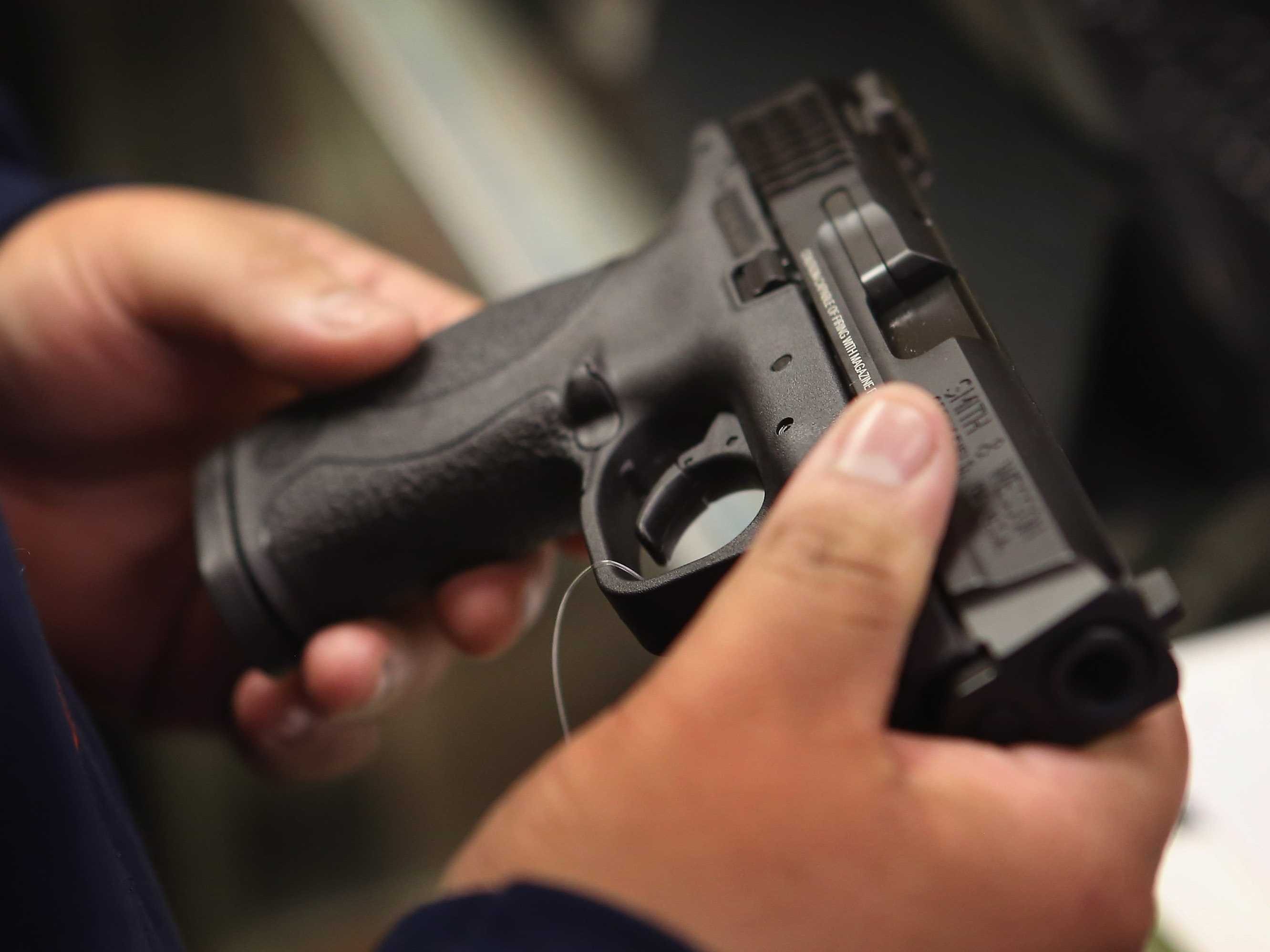
More than a dozen Second Amendment groups are asking the U.S. Supreme Court to take up a high-profile challenge to a San Francisco gun-control measure.

Led by the Firearms Policy Coalition, gun groups say the Ninth Circuit Court of Appeals erred in its decision to uphold San Francisco’s safe-storage law.

Under the ordinance implemented in 2007, the city “requires all residents who keep handguns in their homes for self-defense to stow them away in a lock box or disable them with a trigger lock whenever they are not physically carrying them on their persons.”

The groups referenced the 2007 case before the U.S. Supreme Court, District of Columbia vs. Heller, which upheld an individual right to “keep and bear arms” in the Second Amendment.

“The court should grant certiorari to reaffirm key principles concerning the scope and substance of the Second Amendment,” the groups wrote in their amicus brief. “Many lower courts have taken great pains to avoid the consequences of these decisions — defying a fundamental constitutional limitation this court made explicit in Heller. … At the forefront of this resistance is the lower courts’ refusal to follow this court’s command, made in Heller and reiterated in McDonald, that Second Amendment claims are not to be judged by unrestrained judicial interest balancing.”

Gun groups point to Heller decision

Last March, a unanimous three-judge panel of the Ninth Circuit Court of Appeals upheld the local restrictions on gun ownership, finding that gun storage mandates save lives.

“The record contains ample evidence that storing handguns in a locked container reduces the risk of both accidental and intentional handgun-related deaths, including suicide,” Judge Sandra Ikuta wrote in the ruling for the panel. She added that gun safes “may be readily accessed in case of an emergency.”

San Francisco wikimediaSecond Amendment groups have focused their arguments on the legal precedents, arguing that San Francisco’s regulations contradict the Heller decision, as well as McDonald vs. Chicago in 2009, which held the Second Amendment also applied to state laws.

“The Ninth Circuit’s lamentable decision in Jackson shows why it is the most overturned circuit court in the nation,” said Firearms Policy Coalition President Brandon Combs, one of the state’s leading gun rights activists. “The Supreme Court should take up this case not only to correct a clear wrong, but to stem the tide of judicial resistance in recognizing the right to keep and bear arms as fundamental Constitutional rights.”

He added, “The Second Amendment doesn’t protect second-class rights, and it’s time for courts to take the enumerated right to keep and bear arms at least as seriously as they do unenumerated rights like abortion.”

Other gun groups that have joined the Firearms Policy Coalition in filing the friend-of-the-court brief include the Second Amendment Foundation, the Calguns Foundation, Firearms Policy Foundation and California Association of Federal Firearms Licensees.

San Francisco City Attorney has “faith in the judiciary”

Six San Francisco residents, with the help of the National Rifle Association and the San Francisco Veteran Police Officers Association, first challenged the safe storage law in 2009. The case underscores the lengthy process of seeing gun-control restrictions ultimately become established law.  Long after the press conferences and publicity stunts, government attorneys struggle to defend the restrictions.

Scales of justice, wikimedia“I have complete faith in the judiciary to affirm our position that San Francisco’s gun safety laws protect the public in a manner that’s both reasonable and constitutional,” San Francisco City Attorney Dennis Herrera said in a 2013 press release on the case. “San Francisco has been a top target of the NRA for many years, and I’m proud of the efforts we’ve made to aggressively battle these legal challenges, and protect sensible gun laws that can save lives.”

As CalWatchdog.com has previously noted, the nation’s leading Second Amendment advocacy groups have begun to shift their efforts from the California Legislature to the courthouse. Since 2009, The Calguns Foundation has found great success in its legal challenges, which have targeted the implementation of concealed weapon permits and mandatory waiting periods.

A copy of the brief in the case of Espanola Jackson, et al. vs. City and County of San Francisco, et al., can be viewed at the Firearms Policy Coalition’s website.

Originally published at CalWatchdog.com