Newsom wants “legislative immunity” to block data testimony in prop. 50 case

A last minute maneuver to block evidence that could be harmful to Proposition 50 was hatched today by Newsom’s lawyers, on the basis of “Legislative Privilege.”

Click Here to Subscribe to the California Political Review

Just as the 5th Amendment allows a witness to avoid testifying in court on facts that might incriminate them, another legal privilege, known as the “Legislative Privilege,” is recognized in Federal Court, and allows an elected official to avoid testifying as to the thought processes and private advise received in casting a vote on a piece of legislation. In 1972, a Supreme Court case, Gravel v. United States, 408 U.S. 606, pondered the perimeters of “legislative immunity” and helped establish that it extends to a person who is not an elected official, but is acting like an “alter-ego” of the elected official, and thus is also shielded from having to spill the beans of the work they did for the legislator. But not everyone who works for the legislator gets the privilege.

Facts on whether race was used in numbers crunching for Proposition 50 is key to whether it will withstand constitutional scrutiny before the three-judge panel scheduled to hear the case next Monday in Los Angeles. But the legal roadblock was raised this morning during the pre-hearing deposition of Paul Mitchell by Department of Justice and Plaintiffs’ attorneys. Mitchell is central to the data and creation of Prop. 50’s lines, but when it was time to begin the examination, Newsom’s lawyers invoked “legislative immunity” to stop any testimony from him, which derails uncovering the facts the Plaintiffs need to show that race was a significant factor in the line drawing.

Click here to read the full article in Jim Lacy’s Substack

Ode to Fontana

by James V. Lacy

Las Vegas is a place I visit once or twice annually and when I go there I prefer to drive. I engage the auto’s cruise control, enjoy the vast scenic desert rolling by, and listen to SiriusXM Spa, or Watercolors to relax, or hear one of the news channels. I try to make my trips midweek when there is less traffic and stress on the road. But I had to make my return from a recent trip to Vegas last Friday, and I got caught in a huge traffic jam caused by a wreck, descending Interstate #15 just outside of Victorville, as I was en route back home to southern Orange County. And at rush hour. It was a mess. I really needed to make a stop when I worked my way out of it. Hence my story, a short ode to Fontana.

Over the years of driving to and from Vegas I have plotted out a series of familiar pit stops for a brief meal, or to get a coffee or water, to gas up, or to use the facilities. You need to be a little picky about these stops, to be safe. For example, I have learned that Baker is definitely not a good, safe place to stop for anything. I was almost mugged in daylight at a gas station in Baker once, driving off just in the nick of time, with no thanks to the station staff. And anyway, I am not interested in the slightest in the offerings at the Mad Greek restaurant. (A Gyro Meal in 109 degree weather does not appeal to me.)

But there are good places I have found for sure. I almost always stop at the Denny’s at the truck stop near the Barstow Outlet Mall, which sometimes has Fox News on at the counter, and which is connected at the truck stop to decent restrooms. Hidden in the nearby Outlet Mall itself are a really great set of clean, spacious air conditioned private restrooms with extensive beverage vending machines in the hallway, but you will have to find these for yourself.

Over time I have added a few newer stops that I consider “optional” as in “when you really need to stop.” One of those is the Chili’s on the Summit Road exit on #15 in Fontana. I may stop at the bar for a sparkling water but the real purpose is to use the bathroom and move on. I have made this stop a couple times and I did again this trip, after working thru that horrid traffic jam.

Chili’s Bar and Grill, Summit Road, Fontana

Click here to subscribe to James V. Lacy’s Substack

Why I think Huntington Beach’s VoterID law will be upheld

Despite efforts by Attorney General Rob Bonta and Secretary of State Shirley Weber to overturn Huntington Beach’s voter identification law, the city may prevail due to its authority as a charter city to manage its own elections.

Try as they might to undo Huntington Beach’s efforts to establish a voter identification verification law, Attorney General Rob Bonta and Secretary of State Shirley Weber may lose the case on the merits, and in no small part because of a case precedent established in a matter I lost in the 1st District Court of Appeal in 2023, in Lacy vs. City of San Francisco, 94 Cal.App.5th 238 (2023). 

Click here to SUBSCRIBE to CA Political Review 

Measure A is a charter amendment that was adopted by the people of “Surf City” with 53.4% support in the March 2024 election, whose major provision requires government issued photo identification at the polls. According to the National Conference of State Legislatures, 36 states have laws to show some sort of identification when a person shows up at a polling station to vote. Support for voter ID laws is a popular theme in many so-called “Red states” as a means to protect the integrity of the vote in an election, but progressive politicians and organizations, such as the American Civil Liberties Union, oppose such laws. In the case of the ACLU, it argues that many Americans lack government issued identification, that some find the IDs inconvenient to obtain or cost them money they cannot afford, and that laws requiring them suppress voting, especially among minority groups.

There is no evidence that Measure A is intended to discriminate against any voter group or suppress voting. Yet the State of California’s progressive leaders who run things decided to oppose in court the decision of the voters of Huntington Beach, a charter city, on how they conduct their elections. In a 300+ page challenge filed in Orange County Superior Court last April, Attorney General Bonta and Secretary Weber rehash the progressives’ speculations that verifying voter identity hurts voter turnout and try to make a case that questions about showing IDs at the polls are a pre-emptive matter of “statewide importance,” and that California cities, even charter cities like Huntington Beach, simply do not have this power to manage their own elections. However, these California plaintiffs were denied a chance to get to the merits of the case quickly on a procedural issue raised by the City, as the complaint was found “not ripe for adjudication” and rejected by the Superior Court Judge, as the City Council has not yet implemented its provisions, which are aimed at the 2026 election cycle. Last week Bonta and Weber filed a Notice of Appeal on that ruling, even though the Judge had given them leave to amend their complaint when the City does formally implement the law. Bonta and Weber want to get to the merits right away. In a recent press release announcing the Notice of Appeal, Weber said part of her “role is ensuring that we encourage democracy through voter participation.” Yet there is irony in her suing to cancel an actual vote of the people in Huntington Beach to accomplish her stated goal to “ensure democracy.”

Given the result in Lacy vs. San Francisco, a decision widely hailed by progressives in favor of noncitizen voting, there is further irony in their legal position that conservative Huntington Beach does not have the power to manage its own elections for purposes of Voter ID election integrity, but that liberal San Francisco does have the power to conduct its own elections to include enacting noncitizen voting.

In 2022, in a lawsuit I filed against the City of San Francisco to prohibit the counting of votes in school board elections of persons who are not United States citizens, Superior Court Judge Richard B. Ulmer, Jr., found that the noncitizen voting ordinance of that charter city “is contrary to the California Constitution and state statutes and cannot stand.” A permanent injunction was issued to stop San Francisco from processing noncitizen voting. In denying the City’s Motion in a new Order, Judge Ulmer wrote that San Francisco’s noncitizen voting law “violates unequivocal provisions of the California Constitution and state statute; this is not a difficult or close question.” At that point, I had won my case.

Click here to read the full article in the Daily Journal

California Says “NO” To Higher Taxes!

An overwhelming majority of Californians, 64% of the them, think that federal and state taxes are too high, according to a recent UC Berkeley/LA Times poll.
All those high taxes have contributed to California’s budget surplus, which has more than doubled since January to a staggering $68 billion!
Yet things don’t seem to change in Sacramento – regardless of the crime surge, inflation and high gas prices, a dismal education system, or whether it is universal publicly funded health care or reducing bovine methane emissions, the politicians in Sacramento keep talking about raising more taxes!
Why should there be such a big budget surplus in Sacramento when Californians feel over-taxed? Shouldn’t the surplus be given back to the taxpayers in the first place?

It is time to take action! Californian’s have the opportunity in this election year to ask their elected officials these fundamental questions!
And “Live in Taxifornia,” our weekly radio show on KABC 790 AM Talk Radio in Los Angeles, and our podcasts at www.KABC.com and www.Taxifornia.net, help give voice to these issues! Broadcast live on Sunday’s at 4 pm, all SO of our interesting one-hour shows are archived at www.Taxifornia.net and include policy discussions with many political leaders and elected officials on the most important issues facing our state.
You are invited to join in the debate and conversations about the future of California at “Live in Taxifornia!”
Visit www.Taxifornia.net to hear podcast interviews with California’s top political leaders, and sign up for our free email newsletter!

U.S. Justice Foundation: Trump Heralded for Kavanaugh Nomination

Brett Kavanaugh Donald TrumpPresident Donald Trump is being heralded for his nomination of Judge Brett Kavanaugh to replace retiring Justice Anthony Kennedy on the United States Supreme Court.

On Tuesday, the United States Justice Foundation, a nonprofit public interest, legal action organization, praised President Trump for Kavanaugh’s nomination, saying that he had delivered on his campaign promise to nominate well-qualified conservative judges that would faithfully follow the Constitution.

“Judge Kavanaugh is an outstanding choice with impeccable credentials,” said James Lacy, a former Reagan Administration General Counsel and a spokesperson for US Justice Foundation. “Judge Kavanaugh’s exceptional record makes clear: he follows the law and does not legislate from the bench.”

An All-American jurist, Kavanaugh currently serves on the Court of Appeals for the D.C. Circuit, where he has established himself as an effective and respected “judge’s judge”. Judge Kavanaugh is also considered mainstream by the legal community – with more than 210 judges citing just 100 of his insightful opinions.

“From the start of his career, he’s applied the Constitution faithfully, even when that made him a lonely voice,” author J.D. Vance wrote in a Wall Street Journal op-ed. “He has done so with particular tenacity on the issue that matters most to the president: taking power away from unelected bureaucrats and returning it to elected officials.”

Judge Kavanaugh: Well-Qualified, Respected by Both Sides of Aisle

Judge Kavanaugh’s strongest support will likely come from the legal community, which has praised him for his work to advance diversity and mentor young lawyers.

“Judge Kavanaugh is the #1 feeder judge of clerks to the Supreme Court. He sends clerks to almost all the justices, on both sides of the aisle — ‘a sign of the deep respect that his possible future colleagues have for him,’” David Lat, founding editor of Above the Law, wrote prior to his nomination.

When President George W. Bush nominated Kavanaugh for the U.S. Court of Appeals, Kavanaugh was initially rated “well qualified” by the American Bar Association. The organization eventually bowed to pressure from liberal special interest groups and downgraded Kavanaugh to “qualified.”

Chairman Steven Tober, then-chairman of the 14-member American Bar Association committee, affirmed that Kavanaugh was “indeed qualified to serve on the federal bench.”  “This nominee enjoys a solid reputation for integrity, intellectual capacity and writing and analytical ability,” he wrote. “The concern has been and remains focused on the breadth of his professional experience.”

After graduating with honors from Yale College in 1987, Judge Kavanaugh graduated from Yale Law School in 1990, where he was a Notes Editor on the Yale Law Journal. He clerked for Justice Anthony Kennedy of the Supreme Court, Ninth Circuit Judge Alex Kozinski, and Third Circuit Judge Walter Stapleton.

“Judge Brett Kavanaugh, President Donald Trump’s new nominee for the Supreme Court, is a whip-smart legal conservative,” National Review editorialized in support of President Trump’s selection. “As a judge in the highest-profile appeals court in the nation, he has shown an exemplary dedication to the rule of law.”

Precedent: Ginsburg Confirmed in 57 Days

Historically, the United States Senate has acted swiftly to confirm nominees of Kavanaugh’s caliber and qualifications. In 1993, Ruth Bader Ginsburg, Bill Clinton’s liberal choice to replace Justice Byron White, was confirmed in just 57 days and by a bipartisan 96-3 vote.

Democrats are unlikely to extend the same courtesy to Kavanaugh. According to a recent US Justice Foundation report, Democrats are politicizing the independent judiciary with excessive delays of a diverse cohort of judicial appointments.

“After a historic first year of reforming the judiciary, President Donald J. Trump’s supremely-qualified judicial nominees are now stuck in the swamp,” the USJF concluded in its June 2018 report, “America Needs Great Judges”. “Swamp politics are harming the American people by delaying the swift and independent administration of justice.”

Advice and Consent: Resistance Opposed Before Kavanaugh Finished Speaking

Under Article II, Section 2 of the Constitution, the President “shall nominate, and by and with the advice and consent of the Senate, shall appoint ambassadors, other public ministers and consuls, judges of the Supreme Court, and all other officers of the United States, whose appointments are not herein otherwise provided for, and which shall be established by law.”

 Yet, members of the anti-Trump Resistance are unlikely to faithfully uphold their constitutional obligations. It took California’s far left U.S. Senator Kamala Harris less than 20 minutes to announce her opposition to Kavanaugh’s nomination to the Supreme Court.

“Trump’s Supreme Court Justice nominee, Judge Kavanaugh, represents a direct and fundamental threat to the rights and health care of hundreds of millions of Americans,” Harris tweeted minutes after Kavanaugh’s nomination. “I will oppose his nomination to the Supreme Court. #SCOTUSpick.”

An attack website, Stopkavanaugh.com, was registered anonymously on June 28 and had moved into full attack mode before Kavanaugh could even finish speaking at his nomination announcement. The website is funded by the far-left extremist special interest group, Demand Justice.

Other members of the left wing resistance expressed hope that Kavanaugh’s nomination could be derailed.

“The fluke of good fortune would be for Kavanaugh to turn out, over the course of hearings, to be such a fiasco of a choice that even Republicans would defect,” T.A. Frank, a Vanity Fair contributor, wrote. “Maybe Kavanaugh turns out to be in a cult that requires, say, punching horses in the face, and claims and counterclaims run for months.”

Jim Lacy: Trump’s tax cuts key to transforming the U.S. economy?

“Taxifornia 2016” author and California Political Review Publisher James Lacy discusses the potential impact of President Trump’s tax policy and California’s efforts to become a sanctuary state.

Sanctuary Cities: Is it Racist to Oppose Them? James Lacy Argues No

Is it racist to argue against sanctuary city policies?

In this video from France 24, California Political Review Publisher James Lacy makes the case that obviously it is not, given cases like Kate Steinle’s 2015 murder.

VIDEO: James Lacy on Trump, Crime and Gun Control

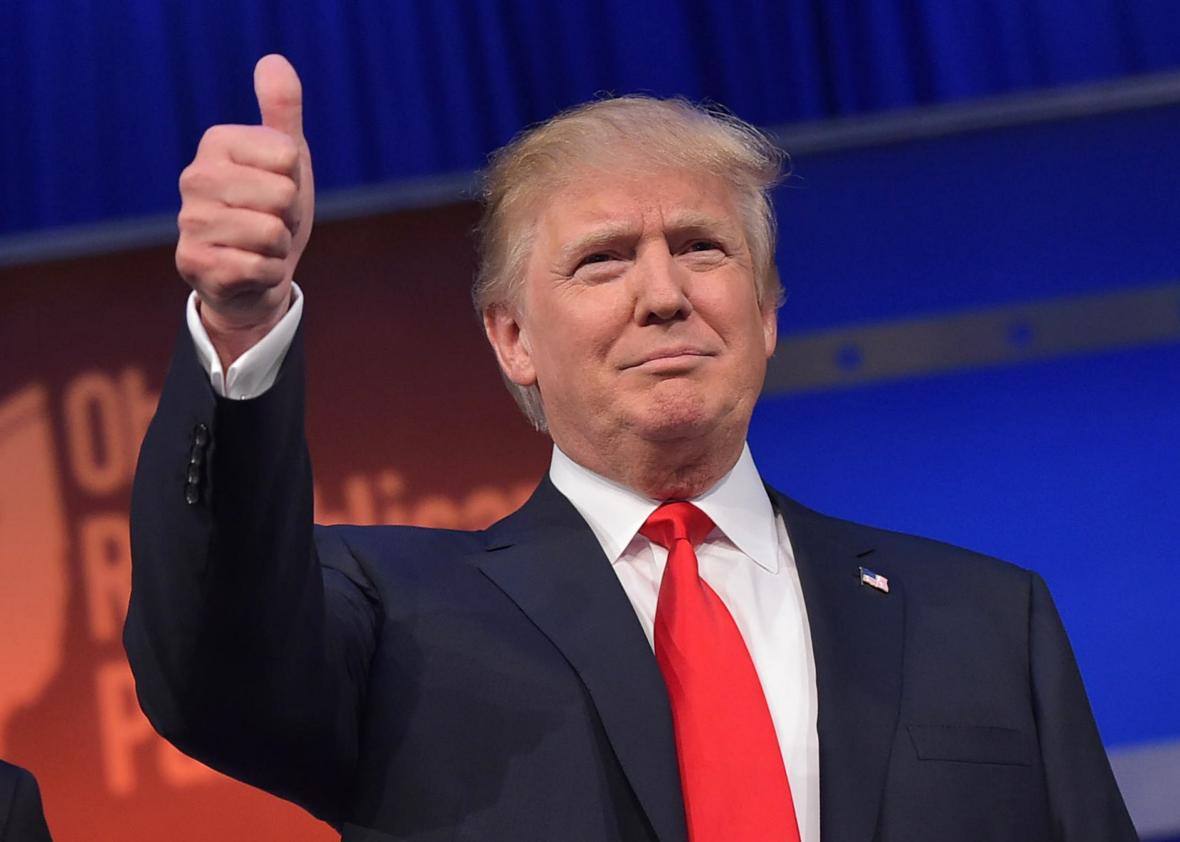
Trump Has Big Lead in New California Poll

In a new poll on the eve of two crucial primary votes in Ohio and Florida, Donald J. Trump has a commanding lead among Republicans in California, which is the state with the largest single remaining source of delegates on the path to the Party’s nomination for President.

When matched with his three other contenders: Ted Cruz, John Kasich, and Marco Rubio, Trump wins the “closed” California Republican primary with 38.3%  of the GOP vote, compared to 22.4% for Cruz, 19.7% for Kasich, and 10.1% for Rubio.  Voters registering an “undecided” opinion were 9.6%.  Trump’s almost 16% advantage over Cruz is statistically significant and well above the margin of error of the poll, which is 4.8%.  The poll results demonstrate that Trump’s standing among Republicans in the Golden State has grown significantly in the last two months.  (In January, in a similar poll using a smaller sample size, the Field Organization pegged Ted Cruz as the leader in California, 25% to 23% for Trump.)  Trump’s lead is commanding in all four “Board of Equalization” districts across the state, suggesting if the election were held today, that he would win in virtually all of the state’s Congressional Districts and capture all of the state’s delegates.

Donald Trump

A total of 172 delegates to the Republican National Convention are up for grabs in the 2016 California primary election, more than 7% of all delegates who will decide the next Republican Presidential nominee, and 14% of the delegates needed to win the nomination.

The poll was commissioned by Landslide Communications.   This new Landslide Communication’s California Poll of Republican Presidential Preferences of likely Republican voters in the 2016 primary election is the second such poll to be released.  In early February, 2015, Landslide released a similar poll showing Wisconsin Governor Scott Walker leading in the state, with similar results confirmed in a subsequent Field Organization poll a week later using a smaller sample size.

Poll Frequencies, NSON Opinion Research’s Summary, and Demographic Cross Tabs are available for download at the end of this article.

Further Details on Landslide’s California Poll appear below.

 California’s importance in 2016 Presidential election to Republicans:

California is a decidedly “blue” state in which Democratic Governor Jerry Brown recently won re-election by over one million votes, bucking a national trend that favored Republicans.  And a Republican candidate for President has not won the state of California since 1988.

However, because California is the largest state in the union by population, with 53 Congressional districts, California has a very large delegation up for grabs for GOP presidential contenders at the next Republican National Convention.

There will likely be a total of 2,461 delegates at the 2016 GOP Convention. California is allotted 172 of those delegates, about 7% of the total. Of California’s delegates, 10 are awarded to the candidate who wins the statewide vote. In addition, a candidate who finishes first in any one of California’s 53 Congressional districts is awarded 3 delegates. The state party chairman and two national committee members are also delegates.  The winning margin at the Republican National Convention will be 1,230 delegates. Theoretically, a candidate who could sweep California’s Republican Presidential primary election could count on the state to deliver just over 14% of the total delegates needed for victory.

List of Presidential contenders in poll:

Poll participants were read a randomized list of the 4 candidates to choose from.

Poll questions:

The poll questions were prepared by James V. Lacy, Managing Partner of Landslide Communications, Inc.  Landslide is one of the largest producers of election slate mail in California. Lacy is the author of the book “Taxifornia” and editor and contributing author of “Taxifornia 2016: 14 Essays on the Future of California” available at Amazon.com, and is a frequent guest commentator on California issues on Fox Business News Channel’s “Varney & Company.” Lacy is also an election law and nonprofit organization attorney through his law firm, Wewer & Lacy, LLP, and is a recipient of the American Association of Political Consultant’s “Pollie” Award. Lacy is not associated with any Presidential campaign. Landslide Communications, Inc., has a history of conducting polls in California, including presidential polling and in the 52nd Congressional District race in 2014 between incumbent Scott Peters and Republican challenger Carl DeMaio.

Interview list:

The list used to make the calls was based on a sophisticated, representative election turn-out model for likely Republican voters in the 2016 California Presidential primary election prepared by Political Data, Inc., located in Norwalk, a respected source of voter files.

To account for a slight bias in the delegate selection process that awards a small “bonus” pool of delegates based on the statewide result, the interview list was balanced for region by Board of Equalization District, with the two more Republican leaning BOE districts of four having marginally more interviews reflected in the statewide total than average, to most accurately reflect the opinion of California’s Republican population.

Interviews and data compilation:

The poll questions were completed by 407 likely Republican voters in the 2016 California Presidential primary election based on Political Data’s model. (The Landslide Communication’s sample size is 25% larger than the sample size used by the Field Organization for similar polling in California.)  The sample size is considered large enough by NSON Opinion Strategy, a respected strategic public opinion research company based in Salt Lake City, Utah, to offer statistical significance in outcome, with +/- 4.8% margin of error at a 95% confidence level statewide. Telephone survey interviews were conducted statewide over two days from Wednesday, March 9th through Thursday, March 10th, by NSON Opinion Strategy.

A summary of the poll prepared by NSON, along with “frequencies” and “crosstabs” may be downloaded below.

For comment, please contact James V. Lacy at 714-878-6191.

James V. Lacy is publisher of California Political Review.

CA Rep Pres Pri – Frequencies

16′ CA GOP Presidential Primary Poll (March)

CA Rep Pres Pri – Crosstab Tables


CA Primary Could Determine GOP Presidential Candidate

James Lacy, author of Taxifornia, explains to radio host Hugh Hewitt why the CA primary in June might actually matter in the quest for the GOP presidential nomination: