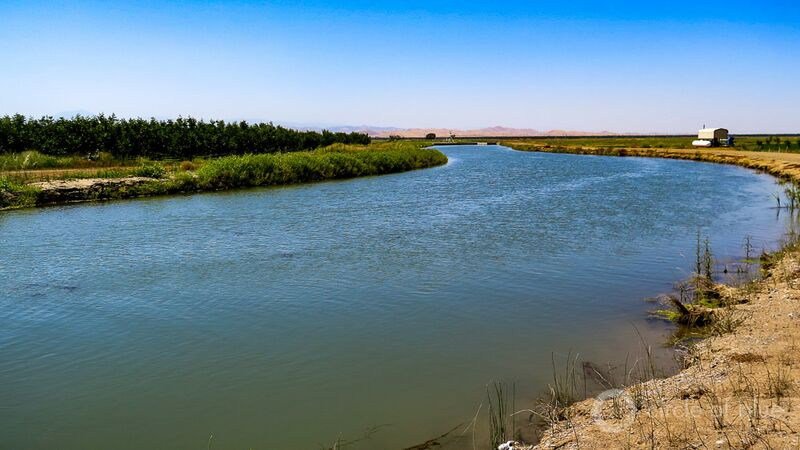
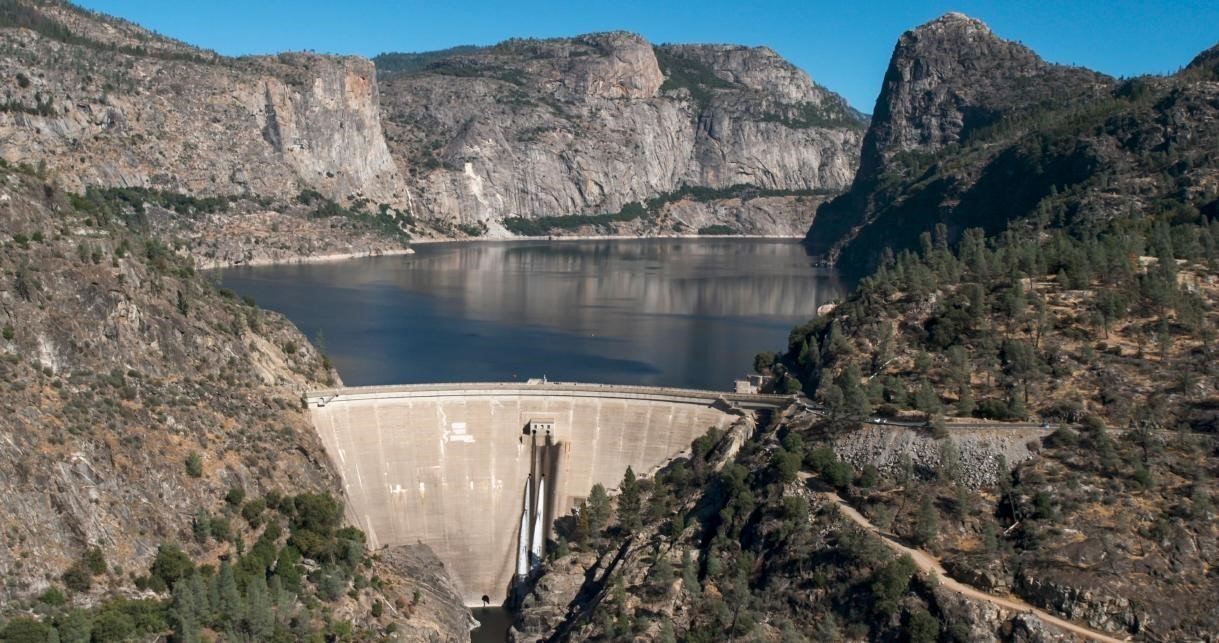
Trump is winning his water tug-of-war with Newsom

President Donald Trump and Gov. Gavin Newsom are in a race to capture as much water as possible in California — possibly even at each other’s expense.

SACRAMENTO, California — President Donald Trump and California Gov. Gavin Newsom are so in sync on California water that they’re in a race to capture as much of it as possible — even at each other’s expense.

Trump and Newsom’s relative alignment on water issues has been good news all around for farmers and cities that draw from both sides of the state’s main water hub: the federally run Central Valley Project, and the aptly named State Water Project, which is state-run.

Click Here to Subscribe to the California Political Review

Water deliveries have ticked up, mostly as a result of back-to-back wet years but also as a result of loosened environmental rules on both sides, much to the chagrin of environmental groups concerned about the collapse of endangered fish populations in the sensitive Sacramento-San Joaquin Delta.

But the feds have been steadily squeezing out more water over the course of the past year — to the point where state customers are getting worried that their own supplies could be in jeopardy.

“It’s on my radar,” said Jennifer Pierre, general manager of the State Water Contractors, which represents the 27 water agencies and 27 million people getting state supplies.

Karla Nemeth, California’s director of water resources, has already played out the scenario in which the state would have to reduce its own pumping to keep enough water flowing through the Delta for endangered fish if the feds took a lot of water: “We talk in real time about whether or not that has the potential to happen and how to avoid that happening,” she said.

“It gets tricky,” she added. “That’s where we have an actual harm to the State Water Project.”

In pre-Trump times, the state and federal sides of the projects operated in tandem, obeying the same pumping limits meant to protect endangered fish. But federal and state water managers have been following diverging rules since Trump’s first administration, when the Interior Department loosened its protections and the state sued. (Newsom has since ordered his own regulators to maximize water supplies, too.)

The situation worsened a year ago when federal officials ordered large releases from two Central Valley dams against established operating norms in an attempt to send water south for the Los Angeles fires, raising the prospect of chaos in the usually closely coordinated joint system of pumps, reservoirs and canals across the state.

Last month saw more divergence: Both state and feds gave their water managers more leeway over pumping, but the state still has to follow stricter environmental limits. The federal government’s more lenient rules allowed it to export roughly 24,000 more acre-feet of water than the state government during the first major storm of the water year in December, according to both state and federal water officials.

Click here to read the full article in Politico

Colorado River talks hit crunch time. What’s at stake for California water?

In summary -Western states in the Colorado River basin are racing a federal deadline to hash out the beginnings of an agreement governing the overtapped river. As the clock ticks down, two questions loom large: Just how real is this deadline, and what does it mean for California?

Welcome to CalMatters, the only nonprofit newsroom devoted solely to covering issues that affect all Californians. Sign up for WhatMatters to receive the latest news and commentary on the most important issues in the Golden State.

The clock is ticking down to a federal deadline Tuesday for California and six other Western states to reach the broad strokes of a deal portioning out supplies from the parched Colorado River. 

Officials at the U.S. Bureau of Reclamation, the federal stewards for the river under the Department of the Interior, have threatened to impose their own plan if the states can’t agree how to manage the river after 2026, when the river’s current rulebook expires. 

Dire projections that another dry year could send the basin’s major reservoirs plummeting to alarmingly low levels have ramped up the urgency, and the tensions

But, after two years of fraught negotiations, the states remain at an impasse. Those in the river’s lower basin — California, Arizona, and Nevada — are clashing with Colorado, Wyoming, Utah and New Mexico upstream. A key point of contention is how much each basin must scale back their use of the overtapped river as climate change further squeezes supplies. 

Click Here to Subscribe to the California Political Review

“We’ve been in a holding pattern, and we need to land this plane by Tuesday,” J.B. Hamby, California’s chief negotiator as chairman of the Colorado River Board of California, told CalMatters. 

California’s dependence on the Colorado River raises the stakes. The state takes more than half of the power generated at Lake Mead’s Hoover Dam, and more water from the main stem than any other in the basin. Half a million acres of alfalfa, winter vegetables and other crops in the Imperial Valley all rely on the Colorado River, which also supplies urban Southern California via the Metropolitan Water District. 

But California has also been relatively impervious to shortages on the river, with senior water rights long seen as bulletproof. Now, the questions hanging over the last days of negotiations are — how real is the threat of missing the deadline? And what exactly would the consequences be for California?

Blown deadlines on the Colorado River

For decades, federal officials have threatened to intervene if states in the Colorado River basin fail to reach agreement. The threat — and the inevitable lawsuits water suppliers fear would follow — have motivated major deals that now govern the river’s operations. 

Click here to read the full article in CalMatters

Newsom issues order to ‘maximize’ stormwater capture

Environmental critics say mandate echoes Trump’s, which they call an ‘attack’ on fish and the ecosystem.

By Ian James

Gov. Gavin Newsom has signed an executive order that he says is intended to “maximize” the capture of water during winter storms.

Newsom issued the order Friday, saying it will make it easier to divert and store water as storms bring rain and snow in the coming days.

“It is more important than ever that we maximize every opportunity to recharge our groundwater supplies,” Newsom said. “As we anticipate rain and snow in Northern California, we are also preparing to use every last drop to boost our water supply for communities and farms throughout the state.”

Click Here to Subscribe to the California Political Review

Environmental and fishing groups, however, denounced Newsom’s order as being alarmingly similar to federal directives from President Trump, saying the governor’s approach threatens to harm vulnerable fish species and the deteriorating ecosystem of the Sacramento-San Joaquin River Delta.

“This order reads as though it was written by President Trump,” said Barry Nelson, a policy representative for the fishing group Golden State Salmon Assn.

He said Newsom’s measure appears to mimic an executive order that Trump announced five days earlier in which he directed federal agencies to “maximize” water deliveries in California and “override” state policies if necessary.

“This reads as almost a carbon copy of that order,” Nelson said. “We call on the governor to stand up to protect California’s environment, not to assist in federal attacks.”

Representatives of water suppliers supported Newsom’s order.

The measures “empower California water managers to blunt the destructive impact of flooding while quickly diverting excess water to recharge groundwater supplies,” said Cathy Green, president of the Assn. of California Water Agencies.

Green said the order underlines the need to modernize “our permitting process to better reflect the state’s ability to remain flexible in the face of climate change.”

Newsom announced the order as the first of three atmospheric river storms reached the state, bringing rain and snow after an unusually dry January.

Newsom ordered the state Department of Water Resources to “maximize diversions of excess flows” during winter storms to store more water in reservoirs such as San Luis Reservoir, located south of the Delta near Los Banos. The order also calls for state agencies to “identify any obstacles that would hinder efforts to maximize diversions” and to promptly report on any “statutory or regulatory barriers that should be considered for suspension.”

State officials said Newsom’s order will make it easier for local agencies to capture more storm runoff to recharge groundwater, which has been depleted by overpumping in many areas. They said the order builds on previous directives by the governor in 2023 that helped increase the amount of water used to replenish groundwater.

By capturing more stormwater, Newsom said, “we are creating a literal rainy day fund to help us recover from a multiyear drought and prepare for our hotter, drier future.” His administration’s water supply strategy calls for preparing for a projected 10% decrease in the state’s supplies by 2040 because of climate change.

Trump has criticized California for what he calls “disastrous” policies and water “mismanagement.”

Conservation advocates said Newsom’s order reveals a similar approach to the president’s directives that they fear could lead to weaker protections for fish and clean water in the Delta and San Francisco Bay.

“This is a capitulation by Gov. Newsom to Donald Trump’s lawlessness and disdain for California, Californians and our environment,” said Jon Rosenfield, science director for the group San Francisco Baykeeper.

While Trump’s order sought to eviscerate federal environmental protections and undermine state law, Rosenfield said, Newsom similarly chose to “waive state laws that require protection of the Bay’s clean water and fish. As a result, we can expect the Bay’s fish and wildlife to continue to spiral towards oblivion.”

California’s two main water delivery systems in the Delta, the State Water Project and the Central Valley Project, deliver water to farmlands and about 30 million people.

Pumping has contributed to the ecological degradation of the Delta, where the fish species that are listed as threatened or endangered include steelhead trout, two types of Chinook salmon, longfin smelt, Delta smelt and green sturgeon.

Because of declining salmon populations, fisheries authorities have shut down the salmon fishing season on the California coast for the last two years, leaving commercial fishermen and charter boat captains out of work.

Click here to read the full article in the LA Times

California’s top environmental official: federal and state water managers are working together closely, for now

SACRAMENTO, Calif. —After President Donald Trump posted on social media earlier this week that the United States Military came into California and under emergency powers “turned on the water,” California’s top environmental official, Natural Resources Secretary Wade Crowfoot is speaking out.

Click Here to Subscribe to the California Political Review

Crowfoot and the state’s Department of Water Resources said the President may have been referring to the completion of routine maintenance at the Jones Pumping Plant in Tracy, which is part of the Central Valley water project.

However, the federal government has yet to explain exactly what action it took. The Bureau of Reclamation, which oversees federal water infrastructure, has yet to respond to KCRA 3’s repeated requests for comment.

Below, Crowfoot weighs in on the claim, the future of the relationship between the state and federal water systems and the potential impacts of a federal funding freeze.

Have you gotten any direct clarity from the administration about what the President meant when he said he “turned the water on” earlier this week?

It has been a bit of a headscratcher to understand just what their talking about from the White House. We are ready to collaborate, whether that’s on wildfire or water, but I have to admit, there’s been a significant amount of confusion as it relates to messages coming from D.C.

I know some Democratic elected officials have asked and we continue to ask about the use of the military to turn on the pumps in Tracy. Would the Army Corps of Engineers be involved in a project like that as the White House suggested earlier this week?

Important to clarify, the Army Corps of Engineers, which is in the Department of Defense, are our civil engineers primarily focused on our flood protection system, so they operate a lot of reservoirs, protecting a lot of downriver communities from flood.

They, however, do not control the infrastructure in the Delta that pumps or exports water. That’s a separate federal agency that’s the Bureau of Reclamation that’s not associated with our Department of Defense.

When people hear the United States military is involved in something, some might interpret that as the use of force to get the state to do something. Has the administration made any kind of threat to the state on the state water project or is there any kind of negotiation happening between the Trump administration and Gov. Newsom’s administration on these water issues?

It’s been quite a frenetic week with a lot of directives coming out of Washington D.C. so I can say it remains unclear for us how that’s being described. I can tell you generally we work really closely with the Bureau of Reclamation and the Army Corps of Engineers, week to week throughout a winter like this winter. We’re working really closely together with those partners and that work has continued.

I think it remains to be seen how these directives from Washington D.C. could impact that, but our focus remains to protect people from the floods when storms come this winter and maximize water supplies for the incoming dry season all while incorporating environmental safeguards that we hold in California.

With the federal funding freeze executive order—which I know is on hold right now because a judge blocked it—is there anything in the Natural Resources that you’re flagging right now in the state that could be impacted by that executive order?

Click here to read the full article in KCRA

Trump takes step to overhaul Delta water deliveries to farms, cities

President Donald Trump lost no time Monday in advancing his agenda for California’s water supply with a “presidential action” intended to send more Delta water south to millions of Southern Californians and San Joaquin Valley farms.

The memo calls on the Secretary of Commerce and the Secretary of the Interior to develop a new plan within 90 days “to route more water from the Sacramento-San Joaquin Delta to other parts of the state for use by the people there who desperately need a reliable water supply.” 

Click here to SUBSCRIBE to CA Political Review 

Entitled “Putting People Over Fish: Stopping Radical Environmentalism to Provide Water to Southern California,” Trump’s order calls for reinstating 2019 regulations drafted by his first administration.

At stake are the rules that guide operation of the federal Central Valley Project and State Water Project, the two systems that deliver water from Northern California rivers to San Joaquin Valley farmers, Southern California residents and other water users in the southern half of the state.

Because the two systems harm salmon and other protected fish, the regulations have been highly contentious and debated among federal and state officials, environmentalists, farm groups, tribes and scientists for decades. 

Trump apparently is asking his agencies to override the latest version, years in the making, that the Biden administration, with the support of Gov. Gavin Newsom’s administration, announced in December.

Karla Nemeth, director of the state Department of Water Resources, said returning to the earlier Trump rules “has the potential to harm Central Valley farms and Southern California communities that depend upon water delivered from the Delta, and it will do nothing to improve current water supplies in the Los Angeles basin.”

She said the rules from the Biden and Newsom administrations are the product of a three-year, labor-intensive process “to balance the needs of tens of millions of Californians, businesses, and agriculture while protecting the environment.”

Click here to read the full article in CalMatters

How years of corruption and mismanagement led to LA running out of water in the middle of the Palisades wildfire

As Los Angeles firefighters faced down the most destructive blaze in the city’s history, they ran out of water.

“The hydrants are down,” a firefighter said over the radio, according to the Los Angeles Times.

Another chipped in: “Water supply just dropped.”

Click here to SUBSCRIBE to CA Political Review 

Fire crews were forced to watch as entire blocks of the Pacific Palisades — one of the most scenic and celeb-packed neighborhoods in LA — were incinerated in a matter of hours late Tuesday and early Wednesday.

“There’s no water in the fire hydrants,” Rick Caruso, who owns the Palisades Village mall in the heart of the devastated area, fumed to local media. “The firefighters are there, and there’s nothing they can do — we’ve got neighborhoods burning, homes burning, and businesses burning. … It should never happen.”

The water shortage was the result of years of mismanagement of LA’s water system — including a federal indictment of a leader and high-profile resignations — as well as major operational problems that drained reserves too quickly.

The Pacific Palisades fire, whipped up by hurricane-force Santa Ana winds, destroyed more than 1,000 homes and businesses. By Wednesday night, it had spread to 16,000 acres (25 square miles), bigger than the island of Manhattan in New York — and crews had not managed to contain any of it.

LA residents voiced their outrage over the conditions that allowed the fire — and two other blazes in Los Angeles County — to rage out of control. Five people had died as of Wednesday night, several others were injured and at least 70,000 were told to evacuate their homes across the LA area.

Adding insult, Democratic Mayor Karen Bass was 7,400 miles away in Africa, and months earlier she had approved an $18 million cut to the fire department.

“RESIGN! WHY ARE YOU IN GHANA?!,” one person commented on an X post by Bass’ office giving an update on the wildfires.

Click here to read the full article in the NY Post

With negligible rain in 8 months, Southern California swings toward drought

California is entering the fourth month of what is typically the rainy season, but in the Southland, the landscape is beginning to show signs of drought.

Click here to SUBSCRIBE to CA Political Review 

The last time Los Angeles recorded rainfall over a tenth of an inch — the threshold that officials typically consider helpful for thirsty plants and the reduction of wildfire risk — was May 5, when downtown received just 0.13 inches of rain.

“It’s safe to say this is [one of] the top ten driest starts to our rainy season on record,” said Ryan Kittell, a National Weather Service meteorologist in Oxnard. “Basically, all the plants are as dry as they normally are in October.”

California’s wet season can run from October to April, although most of the precipitation occurs from December to February.

Current forecasts show little hope that a needed storm could develop in the next few weeks, and the Southern California landscape — ripe for wildfire and never far from chronic water shortages — is paying the price.

Much of the region, including the majority of Los Angeles, San Bernardino, Riverside, Orange and San Diego counties, has fallen into moderate drought conditions, according to a U.S. Drought Monitor map released this week. The last time the Southland saw similarly dry conditions was in early 2023, as the state was exiting a punishing, years-long drought thanks to an exceptional kickoff to the wet season.

Prior to the recent drought report, conditions in Southern California were considered to be “abnormally dry” for the last few weeks. Much of the Central Valley remains in that category.

“Above-normal temperatures and below-normal precipitation resulted in expansion of drought in Arizona, California and Nevada,” the new report said.

The latest long-range forecasts show Southern California remaining in a below-average rainfall pattern for the entire month of January, according to the National Oceanic and Atmospheric Administration’s Climate Prediction Center. And drier conditions appear to be in store statewide beginning next week through mid-January, marking a shift for Northern California in particular, where the season started with bouts of heavy rain and snow.

“Southern California remains dry,” said Michael Anderson, state climatologist for the Department of Water Resources. “We’re being watchful right now. The [snowpack] numbers in the Central and Southern Sierra aren’t where we want them, and certainly the outlooks are not favoring much growth here in January.”

That lack of rain is likely to coincide next week with another offshore wind event in Southern California, Kittell said, which could be potentially damaging.

Click here to read that the full article in the LA Times

California’s water tunnel to cost $20 billion. State officials say the benefits are worth it

SACRAMENTO, Calif. (AP) — California Gov. Gavin Newsom’s administration said Thursday it will now cost more than $20 billion to build a giant tunnel aimed at catching more water when it rains and storing it to better prepare for longer droughts caused by climate change.

State regulators have been trying to build some version of a water tunnel system for decades. The latest form championed by the Democratic governor is a single giant tunnel, down from two tunnels proposed by his predecessor, Jerry Brown. Newsom’s administration says the state can capture more water from the Sacramento River during major storms and send it south for storage.

The last cost estimate, which came in 2020, put the price tag for a single tunnel project at $16 billion. The new analysis says the tunnel will cost $20.1 billion, an increase they attribute almost entirely to inflation, which soared after the pandemic.

Click here to SUBSCRIBE to CA Political Review 

The project would be paid for by 29 local public water agencies, who get their money from customers.

The analysis, conducted by the Berkeley Research Group but paid for by the state, said the tunnel would yield $38 billion in benefits, mostly because of an increased water supply that would be better protected from natural disasters like earthquakes.

“The benefits clearly justify the costs,” said David Sunding, emeritus professor at the University of California, Berkeley who led the analysis.

Despite that rosy outlook, the tunnel remains one of the most controversial projects in recent memory. Environmental groups say its construction would have devastating impacts on the already vanishing ecosystem of the Sacramento-San Joaquin River Delta, the largest estuary on the West Coast that is home to endangered species of salmon and other fish.

The analysis released Thursday notes the environmental impacts include lost agricultural land, reduced water quality in the Delta, and impacts on air quality, transportation and noise.

“Instead of foisting the costs of this boondoggle project onto Californians, the state should invest in sustainable water solutions that promise to restore the Delta ecosystem, not destroy it,” said Barbara Barrigan-Parilla, executive director of the environmental advocacy group Restore the Delta.

State officials note the project now includes $200 million for grants to fund local projects in areas impacted by construction.

Beyond environmental concerns, the project has become a political landmine throughout the Central Valley’s farming communities, where it is seen as yet another attempt by Southern California to steal their water. While most of California’s population lives in the southern part of the state, most of the state’s water comes from the north. In the state Legislature, lawmakers have blocked any effor t to benefit or speed up the tunnel’s construction.

“This new analysis acknowledges what we’ve known all along: the Delta Tunnel is meant to benefit Beverly Hills and leave Delta communities out to dry,” said U.S. Rep. Josh Harder, a Democrat whose district includes the Central Valley communities like Stockton, Lodi and Galt. “I’m sick and tired of politicians in Sacramento ignoring our Valley voices and I will do everything in my power to stop them from stealing our water.”

Click here to read the full article in AP News

California proposes delaying rules aimed at reducing water on lawns, concerning environmentalists

SACRAMENTO, Calif. (AP) — California regulators this week proposed delaying new rules aimed at reducing how much water people use on their lawns, drawing praise from agencies that said they needed more time to comply but criticism from environmentalists who warn that the delay would damage the state’s already scarce supply.

Last year, California proposed new rules that would, cumulatively, reduce statewide water use by about 14%. Those rules included lowering outdoor water use standards below the current statewide average by 2035. On Tuesday, regulators proposed delaying that timeline by five years, until 2040. The State Water Resources Control Board is scheduled to vote on the rules later this year.

Click here to SUBSCRIBE to CA Political Review 

The state would not punish people for using too much water on their lawns. Instead, it could punish the water agency that supplied those homes. There are about 405 of these agencies throughout the state that provide water to nearly 95% of Californians.

To comply with the rules, these agencies must convince their customers to use less water. Their options include public education campaigns and incentives, such as paying to install more efficient fixtures and replacing grass lawns with more sustainable plants. They could also raise rates.

State officials estimated it would cost water agencies about $13.5 billion to comply with these rules — an estimate Chelsea Haines, regulatory relations manager for the Association of California Water Agencies, says is likely too low. Water agencies had asked regulators for more time.

“The challenge is that water suppliers are regulated but compliance will come from Californians making changes to how they use water,” Haines said. “I think there will be a learning curve for residents, and that just takes time.”

The delay means there wouldn’t be an incentive for most water agencies to increase conservation until at least 2035, according to Tracy Quinn, president and CEO of Heal the Bay, an organization dedicated to protecting and restoring the coastal waterways of greater Los Angeles.

Quinn fears the delay would push agencies to make much more expensive investments in new water sources, including desalination plants to make ocean water drinkable and recycling wastewater to use again for drinking.

“The smartest thing to do first is the one that is fastest and cheapest. That’s conservation,” Quinn said. “It is true that conservation is not free, but the cost of conservation needs to be compared to the cost of other new water.”

The goal of the outdoor water standards for 2040 is to have the majority of a person’s yard made up of low-water plants irrigated by a drip system instead of sprinklers, which regulators argue are inefficient in part because they often spray water on sidewalks and asphalt.

But water agencies wouldn’t have to always meet these new outdoor standards. Each agency would have a “water use objective” it must meet that also considers indoor use and how much water is lost from leaky pipes. Agencies could also ask to have even more time to reach these standards, such as if a community uses more water than it should because it has a lot of livestock.

An agency could meet its water use objective through a combination of these factors.

“It’s always a trade-off between trying to advance conservation soon, but also providing enough flexibility so that we avoid unintended consequences,” said Eric Oppenheimer, executive director of the State Water Resources Control Board.

Water is a precious resource in the nation’s most populous state. California has long, dry summers, and relies on rain and snow in the winter and spring to fill up its reservoirs. Although climate change has made those storms more intense, it’s also increased the severity of droughts — making it much harder to manage the state’s water.

California has had plenty of rain and snow in the past two years to ease fears about its water supply. But before that, the state experienced some of the driest years on record and saw its reservoirs drop to dangerously low levels. By the end of this century, state regulators predict California’s snowpack could be up to 65% less than its historic average.

Statewide, residents account for about 6% of California’s water use each year, while businesses account for about 3%. Agriculture accounts for 40% while environmental purposes — including managing wetlands and increasing flows in rivers for fish and other purposes — makes up about 50%.

Regulators proposed changes to the water conservation rules after a critical report was issued this year by the nonpartisan Legislative Analyst’s Office. It found that the proposed regulations were overly complex and would yield only modest savings — about 440,000 acre-feet (542 million cubic meters) of water per year, or about 1% of the state’s total water use. One acre-foot of water is enough to supply two households for one year.

Click here to read the full article in AP News

California agrees to long-term cuts of Colorado River water

Bracing for an ever-growing gap between supply and demand of Colorado River water, three Southwestern states today unveiled an agreement that would cut California’s portion by about 10% in most years. 

California, Nevada and Arizona submitted their plan to the federal government, which is weighing how to manage the drought-plagued river after 2026, when another historic deal expires. The decision will shape long-term management of a vital water source for 40 million people, including 30 tribal nations and 5.5 million acres of agriculture

For more than a century, the river’s water has been allocated among seven states, tribes and Mexico through a collection of deals, acts, treaties and legal decisions known as the Law of the River. But a decades-long mega-drought, culminating in the driest 23-year period in more than a century, has shriveled the river’s already over-allocated flows. 

Click here to SUBSCRIBE to CA Political Review 

Despite recent improvements after storms, Lake Mead and Lake Powell, the basin’s major reservoirs, remain “historically low, and long-term conservation measures will still be necessary,” the U.S. Bureau of Reclamation reported Tuesday.

California takes the biggest share of Colorado River water, with a yearly allocation of 4.4 million acre-feet. And Imperial Valley growers are, by far, California’s biggest user — allocated 3.1 million acre-feet a year, or more than two-thirds of the state’s supply, to irrigate half a million acres of alfalfa, winter vegetables and other crops via the Imperial Irrigation District. 

The Metropolitan Water District, which provides water for 19 million Southern Californians, is another large user, typically receiving about 1 million acre-feet every year, according to Bill Hasencamp, the district’s manager of Colorado River resources. (An acre-foot is enough to supply three Southern California households for a year.)

“It’s a big change that we will have to adapt to as a state,” Hasencamp said, adding “it’s 10%, so we should be able to tighten up our belt 10%.”

In the new proposal, the three states agreed to collectively cut their water use when  levels dip below 69% capacity, ramping up to at least 1.5 million acre-feet a year below 58% of capacity. That’s about 17% of their total allocations, enough to supply 3.75 million Southern California households for a year. Over the past ten years, the reservoirs have largely stayed below that threshold. If the system dips lower than 38% of capacity, any additional cuts up to 3.9 million acre-feet would be shared equally between the Upper and Lower Basin states. 

Arizona would shoulder much of the burden by cutting use about 27% in most years. Nevada would cut back by about 17%, and Mexico — if it agrees — by 250,000 acre-feet, or about 17% of the 1.5 million acre-feet it’s entitled to under an agreement with the U.S.

The three states also proposed a new way to trigger the cuts — based on seven reservoirs across the basin, not just Lake Mead, Hasencamp said.

John Entsminger, general manager of the Southern Nevada Water Authority, said at a briefing today that the aim is to avoid suspicions of states manipulating the system. Withdrawing water from Lake Mead or holding it in Upper Basin reservoirs could result in massive changes in water releases. 

The current system “has led to a number of conflicts between the states since it was implemented in 2007 because literally one foot of elevation difference in Lake Mead or Lake Powell can result in more or less water being released,” Entsminger said. “There were constant suspicions about states gaming the system, being able to manipulate those elevations. And we believe what we are presenting today will remove the ability for this, any even suspicion.” 

Click here to read the full article in CalMatters